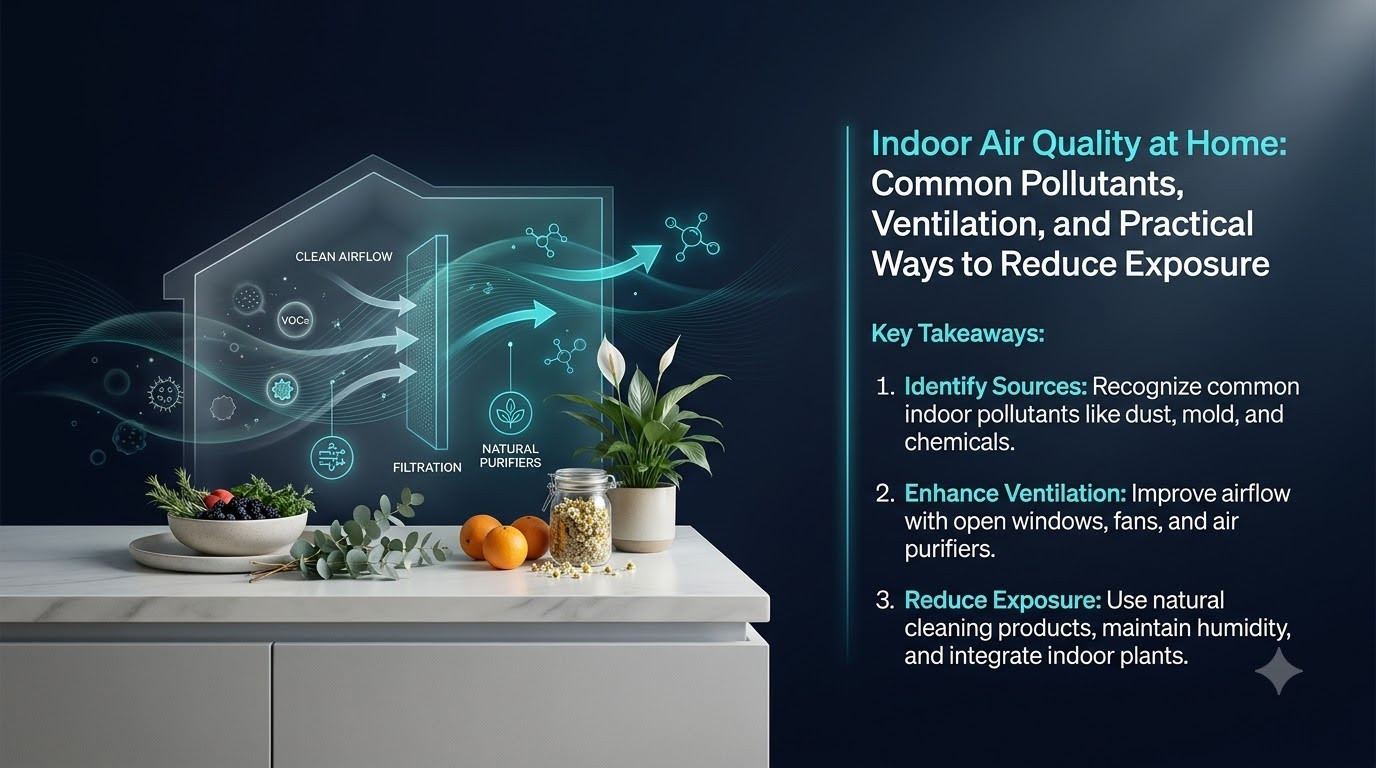
The air inside your home can contain microscopic particles, combustible gases, moisture-related biological allergens, and cooking emissions. Many of these sources remain easy to overlook because indoor air does not always look hazy or carry a noticeable odour. Improving indoor air quality (IAQ) is not about engineering a completely sterile environment or investing in costly consumer gimmicks. Instead, it relies on identifying avoidable pollution sources, managing humidity, ventilating when outdoor air is clean, and choosing certified filtration where appropriate.
This comprehensive guide details common indoor pollutants, their potential physiological impacts, and realistic, evidence-based steps homeowners and renters can implement. Because residential configurations differ substantially, optimal IAQ habits must be adapted to your home's layout, local outdoor Air Quality Index (AQI), cooking fuels, and climate zone.
- 1. What Does Indoor Air Quality Mean?
- 2. Common Indoor Pollutants and Their Sources
- 3. Cooking Emissions, Smoke and Combustion
- 4. Dampness, Mould, Dust and Allergens
- 5. Ventilation and Outdoor Air: When Fresh Air Helps
- 6. Practical Source-Control Habits for Everyday Life
- 7. Air Purifiers and Filters: What They Can and Cannot Do
- 8. A Realistic Home Action Plan
- 9. Indoor Air Quality: Myth vs. Fact
- 10. Frequently Asked Questions (FAQ)
1. What Does Indoor Air Quality Mean?
Indoor air quality describes the physical, chemical, and biological condition of air within residential and commercial structures, specifically focusing on how pollutants, airflow rates, relative humidity, and temperature interact with human health. Given that modern individuals spend up to 90% of their daily lives inside enclosed spaces, cumulative exposure to indoor contaminants represents a major environmental determinant of respiratory and cardiovascular wellbeing.
Indoor atmospheres are shaped by external environmental contaminants infiltrating through open windows, building seams, and mechanical intakes, as well as internally generated pollutants. Everyday household tasks—frying food, lighting candles, burning incense, sweeping dry dust, and using chemical solvent cleaners—release millions of suspended micro-particles and volatile chemical vapors into living areas.
Individual health risks depend on pollutant concentration, chemical toxicity, exposure duration, room volume, and underlying biological susceptibility. Infants, older adults, and individuals managing reactive airway diseases or chronic obstructive pulmonary disease (COPD) exhibit heightened sensitivity to particulate irritation. Furthermore, chronic stress can dysregulate autonomic inflammatory responses; for evidence-based strategies on nervous system balance, review our guide on Nervous System Regulation & Stress Management.
2. Common Indoor Pollutants and Their Sources
Different residential environments present distinct air quality challenges. Identifying specific pollutant categories allows homeowners to apply targeted interventions rather than relying on generic fixes:
| Pollutant Category | Primary Indoor Sources | Physiological & Health Concerns |
|---|---|---|
| Particulate Matter (PM2.5 & PM10) | Cooking oils, tobacco smoke, candles, wood stoves, settled domestic dust. | Fine particles penetrate deep into pulmonary alveoli; may trigger airway hyperreactivity and systemic inflammation. |
| Volatile Organic Compounds (VOCs) | Paints, synthetic varnishes, aerosol sprays, air fresheners, new furniture off-gassing. | Eye, nose, and throat irritation; headaches; potential long-term organ toxicity with chronic high-level exposure. |
| Biological Allergens | Mold spores, dust mites, pet dander, cockroach droppings, airborne pollen. | Exacerbates allergic rhinitis, atopic dermatitis, and bronchial asthma episodes. |
| Combustion Byproducts | Unvented gas stoves, malfunctioning furnaces, kerosene space heaters. | Carbon monoxide binds hemoglobin, reducing oxygen transport; nitrogen dioxide causes bronchial irritation. |
3. Cooking Emissions, Smoke and Combustion
Culinary preparation represents one of the most significant daily sources of residential particulate spikes. High-heat searing, deep frying, and broiling aerosolize fine lipid droplets and ultrafine combustion particles, while natural gas burners emit nitrogen dioxide (NO2), carbon monoxide, and unburned trace hydrocarbons.
To mitigate cooking emissions effectively, use a kitchen exhaust hood ducted directly outdoors. Turn the exhaust fan on before heating pans and allow it to operate for 5 to 10 minutes following meal preparation. A standard recirculating range hood fitted only with a basic mesh screen does not vent combustion gases outside; it merely traps larger grease droplets while allowing microscopic particles and gases to recirculate.
Transitioning to electric induction cooktops eliminates point-of-use gas combustion emissions. However, because hot oils and searing meats still release airborne particulates on electric cooktops, proper exhaust ventilation remains essential. For structured dietary guidelines on cleaner, whole-food meal planning, explore our Clinical Nutrition Master Guide.
4. Dampness, Mould, Dust and Allergens
Managing indoor moisture is fundamental to preventing microbial contamination. Plumbing leaks, inadequate foundation drainage, persistent condensation on windowpanes, and unvented shower steam elevate relative humidity above 60%, creating environments where fungal molds (including Aspergillus and Penicillium species) and dust mite populations proliferate rapidly.
- Prompt Remediation: Repair structural water leaks within 24 to 48 hours and dry saturated carpets or drywall immediately to prevent fungal spore germination.
- Mechanical Bathroom Exhaust: Operate bathroom exhaust fans during showers and for at least 20 minutes post-shower to clear moisture vapor.
- Target Relative Humidity: Maintain indoor relative humidity between 30% and 50% using air conditioners or dedicated residential dehumidifiers in humid climates.
- Dust Control Practices: Utilize damp microfiber cloths rather than dry feather dusters, which merely launch settled allergens back into the breathing zone.
Indoor dust also collects microscopic synthetic fibers shed from textiles and home plastics. For insights on minimizing particulate degradation from consumer polymers, see our detailed review on Microplastics in Everyday Life & Household Exposure.
5. Ventilation and Outdoor Air: When Fresh Air Helps
Ventilation introduces outdoor air to dilute and displace accumulated indoor contaminants. Natural cross-ventilation—opening windows on opposite sides of a residence—is an effective strategy when ambient outdoor air is clean and meteorological conditions are favorable.
However, outdoor air is not universally pristine. Urban vehicle exhaust, seasonal agricultural burning, elevated pollen counts, and regional wildfire smoke can introduce hazardous fine particulates (PM2.5). Check local Air Quality Index (AQI) reports prior to opening windows; during wildfire or high-smog episodes, keep windows securely closed and transition home mechanical systems to recirculation mode with high-efficiency filtration.
Standard residential split air conditioners cool and recirculate room air; they do not introduce fresh outside air. Understanding whether your HVAC system provides mechanical ventilation or simple thermal recirculation is critical for maintaining healthy indoor air exchange.
6. Practical Source-Control Habits for Everyday Life
Eliminating or replacing pollutant sources is far more effective and economical than attempting to filter continuous toxic emissions. Implement these evidence-informed source-control protocols:
- Institute a Zero-Smoking Policy: Prohibit all indoor tobacco, cigar, and e-cigarette use. Environmental tobacco smoke deposits hazardous semi-volatile organic compounds ("third-hand smoke") onto upholstery, carpets, and drywall for months.
- Avoid Mixing Chemical Cleaners: Always follow product safety labels. Never mix sodium hypochlorite (bleach) with ammonia, vinegar, or acidic cleaners, as this produces chloramine or chlorine gas, precipitating severe pulmonary injury.
- Eliminate Synthetic Air Fresheners: Scented plug-ins, aerosol sprays, and incense release limonene, terpenes, and phthalate plasticizers that react with ambient ozone to form secondary pollutants like formaldehyde.
- Store Solvents in Detached Structures: Store paints, gasoline, varnishes, motor oils, and lawn pesticides in detached storage sheds or well-ventilated exterior garages rather than basement utility rooms.
- Nighttime Digestive Rest & Dinner Timing: Late-night kitchen frying introduces particulates right before bed, while heavy meals degrade sleep architecture. Review our protocols on Practical Evening Nutrition & Healthy Eating.
7. Air Purifiers and Filters: What They Can and Cannot Do
Portable air cleaners serve as valuable supplements to source control and ventilation, particularly in bedrooms and living rooms during wildfire seasons or high-pollen periods. However, selecting effective units requires evaluating objective performance specifications:
| Air Cleaner Technology | Target Pollutant Class | Clinical & Operational Limitations |
|---|---|---|
| True HEPA Filter (H13/H14) | Particulates (PM2.5, pollen, mold spores, pet dander). | Does not capture gases, VOCs, carbon monoxide, or radon. Requires periodic filter replacements. |
| Activated Carbon Adsorption | Gaseous VOCs, solvent vapors, chemical cooking odors. | Bed thickness and carbon weight determine capacity; thin carbon mats saturate rapidly. |
| Ozone Generators & Ionizers | Marketed for odor and microbial destruction. | Avoid in occupied spaces. Direct lung irritant; ozone reacts with household chemicals to form toxic secondary pollutants. |
When selecting a portable unit, evaluate its Clean Air Delivery Rate (CADR) for smoke, dust, and pollen, ensuring the rating matches or exceeds the square footage of the target room. Maintain filters according to manufacturer schedules, as clogged media restricts airflow and reduces filtration efficiency.
8. A Realistic Home Action Plan
Optimizing your home air quality does not require costly renovations. Follow this manageable, structured 4-step framework:
- Step 1: Check Alarms & Combustion Safety: Verify that smoke alarms and digital carbon monoxide detectors are installed on every level and outside all sleeping areas. Test batteries monthly.
- Step 2: Optimize Kitchen Exhaust: Clean metal range hood grease filters monthly in warm, soapy water. Run exhaust fans on high whenever using frying pans or gas burners.
- Step 3: Establish Bedroom Sanctuaries: Run a properly sized True HEPA air purifier on low speed in sleeping areas. Keep pets out of bedrooms if animal dander sensitivity is documented.
- Step 4: Check Regional Outdoor AQI Daily: Make checking air quality a daily habit. Open windows during clean morning intervals; seal windows and switch to mechanical filtration during elevated pollution episodes.
9. Indoor Air Quality: Myth vs. Fact
| Common Residential Myth | Scientific Reality & Environmental Evidence |
|---|---|
| Myth 1: Houseplants can filter and clean all indoor residential air. | Fact: While the 1989 NASA clean-air study demonstrated VOC uptake in sealed micro-chambers, hundreds of potted plants would be needed in a typical home to match a single window air exchange or a standard HEPA purifier. |
| Myth 2: A home that smells pleasantly perfumed has clean air. | Fact: Fragrances mask odors by introducing synthetic VOCs and phthalates into the breathing zone without eliminating the root contaminant. |
| Myth 3: Painting over black mold eliminates the problem. | Fact: Mold continues to consume drywall cellulose beneath paint layers. The moisture source must be dried and damaged materials safely removed. |
| Myth 4: Keeping all windows permanently sealed is the safest choice. | Fact: Sealed, unventilated structures trap indoor-generated carbon dioxide, VOCs, and moisture, leading to higher pollutant concentrations than outdoor air. |
10. Frequently Asked Questions (FAQ)
1. What is the easiest way to improve indoor air quality at home?
Start by identifying and reducing a major pollution source. Use kitchen or bathroom exhaust ventilation where available, avoid indoor smoking, follow product safety labels, fix leaks and ventilate with outdoor air when conditions are suitable. These steps often deserve attention before buying a new device.
2. Does an air purifier remove dust, smoke and odours?
A properly sized particle filter can reduce some airborne dust and smoke particles. Odours and gases are different: removing them may require an appropriate gas-phase filter, and results depend on its design and capacity. An air purifier cannot remove every pollutant or correct the source of a building problem.
3. Should I open windows when outdoor air pollution is high?
Not automatically. Opening windows can increase ventilation when outdoor air is cleaner, but it may bring more pollution indoors during smoke, dust or high-pollution events. Check reliable local air-quality information and follow local public-health advice. Source control and suitable filtration may be more useful when opening windows would increase exposure.
4. How can I tell if mould is affecting my home?
Look for visible growth, recurring condensation, water stains, leaks or a persistent musty smell. These signs warrant investigating moisture, but they cannot determine the exact health risk or identify every hidden problem. Correct the moisture source and seek professional help for extensive growth or repeated water damage.
5. When should I seek professional help for indoor air problems?
Seek prompt help for suspected carbon monoxide exposure, a fuel leak, serious combustion-appliance concerns or symptoms that may indicate an immediate hazard. For persistent dampness, suspected radon, renovation hazards, recurring unexplained odours or ongoing respiratory symptoms, consult the relevant qualified building, environmental-health or healthcare professional.
📚 Authoritative Clinical References
- US Environmental Protection Agency (EPA): Comprehensive Guide to Improving Indoor Air Quality
- US EPA: Technical Evaluation of Residential Air Cleaners and Filters in the Home
- World Health Organization (WHO): Household Air Pollution, Combustion Fuels, and Health Impact
- Health Canada: Evidence-Based Methods to Improve Indoor Air Quality in Your Home
- Centers for Disease Control and Prevention (CDC): Indoor Environmental Quality & Respiratory Protection