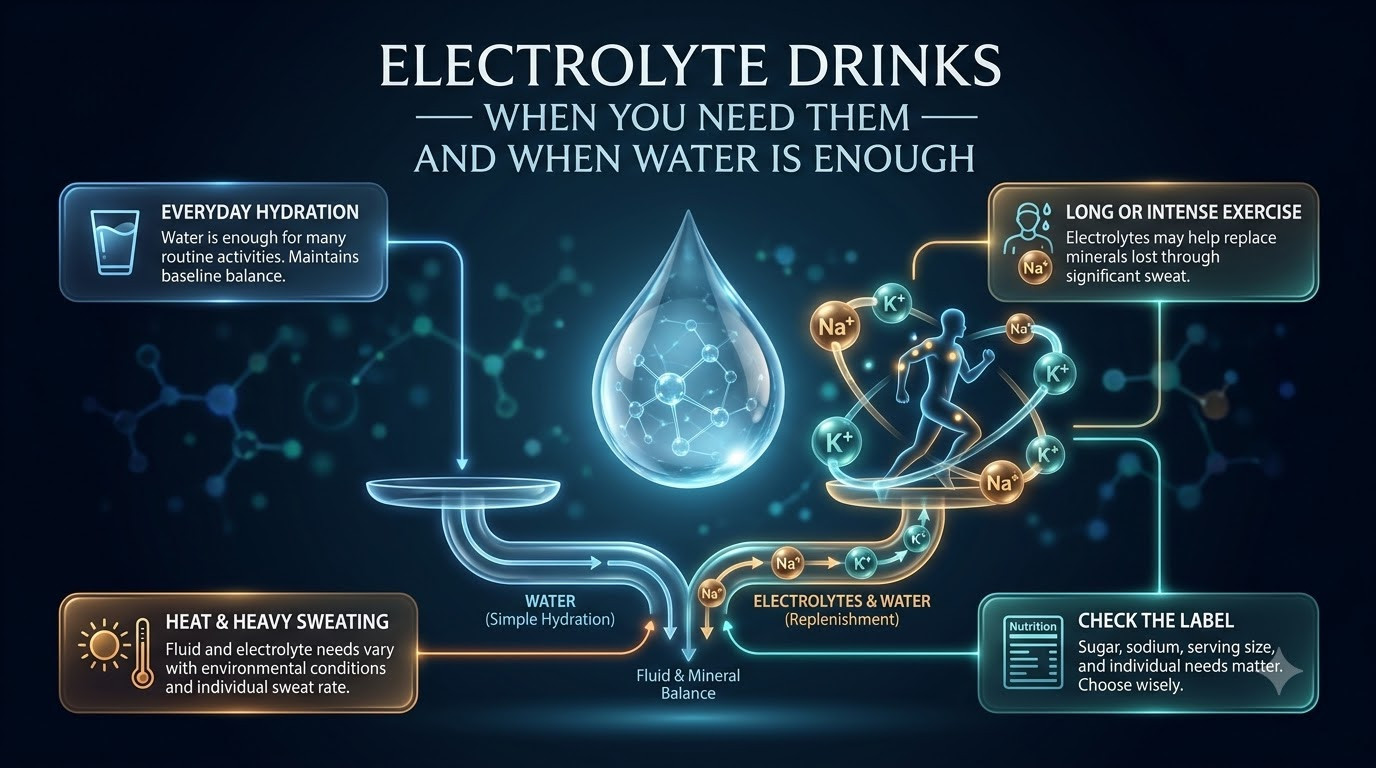
Electrolyte drinks are heavily marketed across fitness media as essential for daily vitality, post-workout recovery, energy enhancement, and heat protection. However, the vast majority of people do not require an electrolyte-supplemented beverage simply because they feel thirsty or finish a routine gym session. Under ordinary circumstances, plain drinking water and regular meals provide more than enough fluid and minerals to maintain cellular homeostasis.
Specific scenarios do warrant electrolyte supplementation—particularly prolonged endurance training, heavy sustained sweating in high heat, or acute fluid loss from gastroenteritis. Choosing the right beverage requires matching its nutritional formulation to your actual physiological losses rather than relying on commercial marketing slogans.
1. What Are Electrolytes and Why Does the Body Need Them?
Electrolytes are minerals that dissociate into electrically charged ions (cations and anions) when dissolved in aqueous solutions like blood plasma and intracellular fluid. They regulate neuromuscular excitability, acid-base balance, and osmotic fluid distribution:
- Sodium ($Na^+$): The primary extracellular cation. Controls blood volume, osmotic pressure, and nerve action potentials; lost in greatest abundance via eccrine perspiration.
- Potassium ($K^+$): The primary intracellular cation. Governs cardiac electrical conductivity and skeletal muscle repolarization.
- Chloride ($Cl^-$): The chief extracellular anion, maintaining electrical neutrality alongside sodium.
- Magnesium ($Mg^{2+}$): Enzymatic cofactor supporting ATP activation and neuromuscular junction stability.
- Calcium ($Ca^{2+}$): Essential for myocardial contraction, muscle filament sliding, and bone matrix stability.
During physical exertion, eccrine sweat glands excrete water along with variable amounts of sodium and chloride (ranging from 20 to 80 mmol/L depending on heat acclimation and genetics). Standard balanced meals naturally replenish these mineral losses without requiring formulated drinks.
2. When Is Plain Water Enough?
For most daily activities, water provides complete hydration without unnecessary calories, food dyes, or excess sodium:
- Desk Work and Sedentary Tasks: Baseline metabolic turnover produces minimal sweat solute loss.
- Workouts Under 60 Minutes: Resistance training, light jogging, or recreational fitness classes in temperate conditions do not deplete electrolyte stores.
- Standard Daily Meals: Eating foods like whole grains, vegetables, dairy products, and lightly salted meals easily replenishes baseline daily mineral requirements.
Thirst serves as an effective physiological guide for healthy individuals in moderate climates. However, forcing excessive volumes of plain water in an attempt to keep urine completely clear is unnecessary and can be counterproductive.
3. When May Electrolyte Drinks Be Useful?
Electrolyte-enhanced beverages are indicated under specific physiological conditions:
- Prolonged Endurance Exercise: Activities lasting beyond 60 to 90 minutes (marathons, long-distance cycling, high-intensity tournament sports) deplete glycogen and induce significant cumulative sodium losses. Co-ingesting sodium and carbohydrates accelerates intestinal fluid absorption via sodium-glucose cotransport (SGLT1) proteins.
- High Heat and Humidity: When exercising or performing heavy labor in extreme heat, sweat rates can exceed 1 to 2 liters per hour, increasing the risk of cramping and thermal strain.
- Acute Gastroenteritis (Vomiting & Diarrhea): Rapid gastrointestinal fluid losses deplete both water and electrolytes, where clinical oral rehydration is essential.
4. Sports Drinks vs. Electrolyte Water vs. ORS (Comparison Table)
Commercial hydration products vary significantly in sodium, sugar, and osmolarity. Choosing the appropriate formulation depends on your specific circumstances:
| Beverage Type | Typical Formulation | Primary Intended Purpose | Clinical Considerations |
|---|---|---|---|
| Plain Water | 0 kcal, 0g sugar, trace minerals only. | Everyday baseline hydration; workouts under 60 minutes. | Optimal, cost-free default; lacks electrolytes for prolonged endurance. |
| Commercial Sports Drink | 6–8% carbohydrate (14–19g/8oz), ~100–160mg sodium. | Endurance exercise lasting >60–90 minutes. | Provides fuel and retains fluid; contains added sugars unnecessary for sedentary use. |
| Electrolyte Water / Zero-Sugar | 0–10 kcal, 0g sugar, low sodium (10–50mg). | Flavor enhancement; light exercise in warm conditions. | Sodium levels are generally too low to replace heavy endurance sweat losses. |
| Oral Rehydration Solutions (ORS) | WHO standard: 75 mmol/L glucose, 75 mEq/L sodium, low osmolarity (245 mOsm/L). | Replacing fluid lost during acute diarrhea, vomiting, or clinical dehydration. | Formulated for optimal cellular absorption; do not alter dilution ratios. |
| Energy Drinks (Stimulant-Based) | High caffeine (80–300mg), taurine, B-vitamins, variable sugar. | Acute alertness and central nervous system stimulation. | Not a hydration beverage; can elevate heart rate and increase diuretic fluid loss. |
5. How to Read and Evaluate an Electrolyte Label
- Serving Size vs. Bottle Size: Many 20-ounce bottles contain 2.5 servings. Check the nutrition facts panel for total sodium and sugar across the entire container.
- Sodium Concentration: Effective sports drinks typically provide 400 to 1,100 mg of sodium per liter (~100–250 mg per 8 fl oz) to match endurance sweat losses.
- Carbohydrate Percentage: Look for a 6% to 8% carbohydrate concentration. Solutions exceeding 8% to 10% delay gastric emptying and can cause osmotic gastrointestinal cramping.
- Unnecessary Additives: Artificial colorings, proprietary energy blends, and high-dose synthetic vitamins offer no direct hydration benefit.
6. A Practical Hydration Framework for Daily Life
- Daily Baseline: Keep water accessible throughout the day; drink to satisfy thirst; pair fluids with meals.
- Short Gym Workouts: Drink water before and during exercise; consume a normal post-workout meal.
- Endurance Sessions (>90 min): Sip 4 to 8 ounces of an electrolyte-carbohydrate sports beverage every 15 to 20 minutes to maintain blood volume and fuel working muscles.
- Workplace Heat Safety: In industrial or agricultural heat, drink water regularly and follow established workplace cooling schedules.
7. Common Electrolyte Myths Debunked
- Myth 1: "Muscle cramps are always caused by low electrolytes." Most exercise-associated muscle cramps (EAMC) stem from neuromuscular fatigue and alpha-motor neuron hyperactivity, not acute mineral deficits.
- Myth 2: "More sodium is always better for hydration." Excessive electrolyte supplementation without adequate water intake increases plasma hyperosmolality, aggravating cellular dehydration.
- Myth 3: "Sports drinks protect against heat stroke." Heat stroke is caused by thermoregulatory failure in high heat. No beverage prevents heat illness without adequate rest, shade, and exertion moderation.
8. Clinical Safety: Renal Disease, Heart Failure, and Hyponatremia
- Exercise-Associated Hyponatremia (EAH): Overconsuming hypotonic fluid (plain water or low-sodium sports drinks) beyond sweat loss dilutes serum sodium below 135 mEq/L, risking fatal cerebral edema and seizures. Drink according to thirst during endurance events.
- Chronic Kidney Disease (CKD): Impaired kidneys cannot excrete excess potassium or sodium, creating risks of life-threatening hyperkalemia (cardiac arrhythmias) and fluid overload. Avoid electrolyte products without nephrology approval.
- Congestive Heart Failure (CHF) & Hypertension: Sodium-heavy electrolyte drinks expand intravascular volume, aggravating hypertension and pulmonary congestion. Adhere strictly to physician-prescribed sodium and fluid limits.
Frequently Asked Questions
1. Do I need electrolyte drinks every day?
No. Most healthy people can meet their routine hydration needs with water and obtain electrolytes through a balanced diet. Special electrolyte drinks are generally unnecessary unless activity, sweating, illness, or an individual health situation creates a specific need.
2. Is water enough after a workout?
Water is usually enough after many short or moderate workouts, especially when sweating is not excessive and you eat regular meals. Prolonged, intense exercise or heavy sweating may make a drink containing sodium and carbohydrate useful, depending on individual losses and recovery needs.
3. Are electrolyte drinks better than water in hot weather?
Not automatically. Water remains important in hot weather. An electrolyte drink may be useful when heavy sweating continues for an extended period, but cooling breaks, reduced exertion, and heat-safety measures are also essential. No drink prevents heat stroke.
4. Are sports drinks and oral rehydration solutions the same?
No. Sports drinks are generally designed for exercise and may provide carbohydrate and electrolytes. Oral rehydration solutions use a specific formulation intended to replace fluid and electrolytes lost during conditions such as diarrhea. Follow ORS preparation instructions and seek medical advice when symptoms are serious.
5. Can drinking too many electrolyte drinks be harmful?
Yes. Depending on the product and the amount consumed, excessive intake can add unnecessary sugar, sodium, or other minerals. Excessive fluid intake can also contribute to dangerously low blood sodium. People with kidney, heart, blood pressure, or electrolyte-related conditions should seek individualized advice.
📚 Research and Further Reading
- Centers for Disease Control and Prevention (CDC). About Water and Healthier Drinks. Everyday hydration guidelines and beverage nutritional trade-offs. Read CDC Water Guide.
- American College of Sports Medicine (ACSM). Exercise and Fluid Replacement Position Stand. Clinical recommendations on sweat sodium losses, carbohydrate-electrolyte formulations, and hyponatremia prevention. Read ACSM Position Stand.
- CDC / NIOSH. Keeping Workers Hydrated and Cool in Extreme Heat. Occupational safety protocols for heat stress and fluid replacement. Read NIOSH Heat Safety Protocols.
- World Health Organization (WHO). The Treatment of Diarrhoea: A Manual for Physicians and Other Senior Health Workers (Oral Rehydration Salts). Low-osmolarity ORS formulations and clinical management. Read WHO ORS Guidelines.