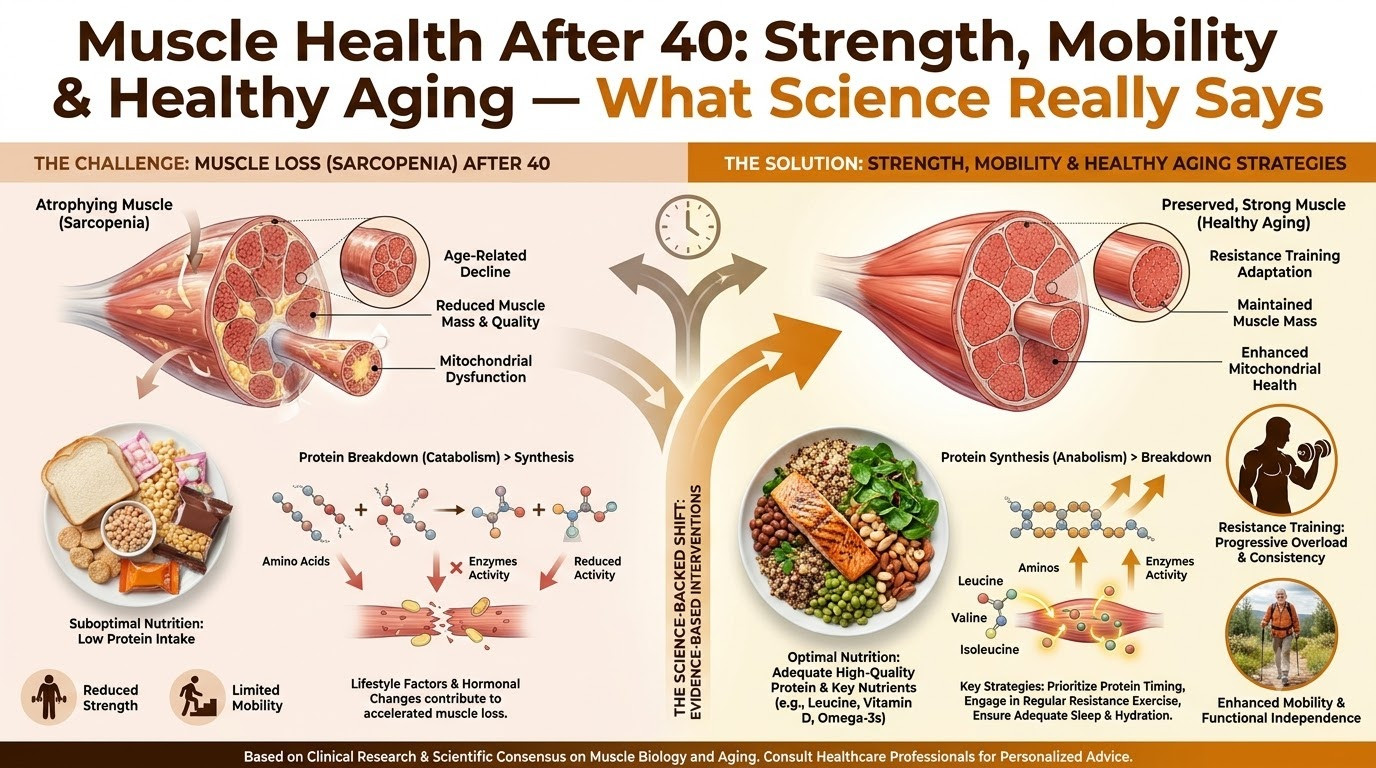
Muscle health is an important part of healthy aging, but it is often overlooked until everyday activities begin to feel more difficult. Getting up from a chair, climbing stairs, carrying shopping bags, maintaining balance, or recovering after physical activity all depend partly on the strength and function of skeletal muscles.
After the age of 40, changes in muscle mass, strength, recovery, activity levels, and nutrition can gradually influence physical function. These changes do not mean that weakness is inevitable. Regular resistance exercise, adequate nutrition, aerobic activity, balance training, and consistent recovery habits can help people maintain useful strength and mobility as they age.
Recent research has encouraged a broader view of muscle health. The 2025 Asian Working Group for Sarcopenia consensus update highlights muscle health as a life-course priority rather than a concern limited to very old adults. This approach considers the relationship between muscles, physical performance, bone health, metabolism, and overall functional ability.
- 1. Why Muscle Health Matters After 40
- 2. What Is Sarcopenia and How Is It Different From Normal Aging?
- 3. What Can Change in the Body After 40?
- 4. Benefits of Maintaining Strength and Mobility
- 5. Resistance Training: A Core Habit for Muscle Health
- 6. Protein and Nutrition: Supporting the Muscle-Repair Process
- 7. Mobility, Balance and Aerobic Activity Complete the Picture
- 8. A Practical Weekly Muscle-Health Routine
- 9. Tracking Progress, Common Mistakes and Safety
- 10. Frequently Asked Questions and Final Takeaway
1. Why Muscle Health Matters After 40
Skeletal muscles do much more than change body shape. They allow the body to move, maintain posture, stabilize joints, produce force, and perform everyday tasks. Skeletal muscle is also the body's primary metabolic sink, responsible for over 80% of postprandial glucose disposal, making it a central regulator of insulin sensitivity, systemic lipid metabolism, and basal metabolic rate.
When muscle strength and physical function are maintained, routine activities remain easier to perform throughout midlife and older adulthood. Everyday tasks such as walking on uneven surfaces, standing up from a low chair without using armrests, lifting heavy household objects, and managing stairs depend directly on the contractile force of lower-limb and core musculature.
Muscle health becomes particularly important as people grow older because several age-related physiological changes occur concurrently. A person may gradually become more sedentary, experience prolonged recovery intervals, consume less dietary protein, or develop joint discomfort that restricts movement. To understand how systemic nutrients and cellular recovery interact, review our comprehensive Clinical Nutrition Master Guide.
Muscle mass and muscle strength are not identical
Muscle mass refers broadly to the total cross-sectional volume of skeletal muscle tissue in the body. Muscle strength describes the maximum external force generated by a specific muscle group. Physical performance refers to how effectively a person executes coordinated movements such as gait speed, chair rising, or stair climbing.
These measures are related, but they are not interchangeable. Someone may have a relatively normal body weight and visible muscle volume while experiencing compromised muscle strength or poor physical performance due to intramuscular fat infiltration (myosteatosis). This is why clinical muscle health assessments evaluate functional strength rather than body weight alone.
2. What Is Sarcopenia and How Is It Different From Normal Aging?
Sarcopenia is a progressive, generalized skeletal muscle disorder characterized by low muscle strength, with low muscle quantity or quality confirming the clinical diagnosis. While biological aging contributes to physiological changes, severe muscle wasting and debilitating weakness are not inevitable consequences of getting older.
Normal aging can involve gradual changes in muscle tissue and physical capacity. Sarcopenia is a distinct clinical condition requiring objective medical assessment. A person should not self-diagnose sarcopenia simply because they feel fatigued after a busy week or notice subtle changes in body composition.
| Physiological Metric | 20s & 30s Baseline | Post-40 Biological Shift | Evidence-Based Countermeasure |
|---|---|---|---|
| Muscle Protein Synthesis (MPS) | Robust response to modest protein doses (15–20g). | Anabolic Resistance: Requires higher per-meal protein (30–40g) and leucine to trigger MPS. | Consume 0.4g/kg protein per meal; include leucine-rich dairy, eggs, fish, or pulses. |
| Fast-Twitch Muscle Fibers (Type II) | Dense, explosive power fibers fully recruited. | Preferential denervation and atrophy of Type II fibers, reducing explosive recovery power. | Progressive resistance training with moderate-to-heavy loads or explosive concentric intent. |
| Neuromuscular Motor Units | Rapid, synchronized firing between spine and muscles. | Gradual loss of spinal motor neurons; slower muscle recruitment during sudden stumbles. | Multicomponent balance drills and functional multi-joint compound movements. |
| Muscle Architecture & Quality | Dense, clean muscle bundles with minimal lipid storage. | Myosteatosis: Microscopic fat infiltrates muscle tissue, degrading force transmission. | Consistent weekly resistance training combined with regular brisk walking. |
The 2025 Asian Working Group for Sarcopenia (AWGS) consensus update expanded focus to muscle health in middle-aged adults (ages 50–64), emphasizing a life-course preventive strategy. Identifying declines in handgrip strength or five-time chair-stand speed early allows middle-aged adults to correct muscle deficits before physical disability occurs.
3. What Can Change in the Body After 40?
There is no sudden biological cliff when muscle health collapses. The rate and pattern of change vary according to genetics, daily physical activity, diet, sleep quality, and chronic medical history. However, several distinct physiological trends become prominent during middle adulthood:
- Development of Anabolic Resistance: Aging muscles exhibit a blunted anabolic response to both circulating hyperaminoacidemia (dietary protein) and exercise. Older muscle tissue requires a higher threshold concentration of the essential amino acid leucine to stimulate the mTORC1 signaling pathway.
- Reduced Physical Activity Cycles: When occasional joint discomfort or busy careers reduce movement, physical deconditioning accelerates. Reduced movement further diminishes muscular capacity, creating a cycle of decline.
- Autonomic Recovery Demands: Chronic psychological stress, poor sleep architecture, and elevated evening cortisol impair nighttime tissue repair. Tracking recovery metrics using consumer devices can provide useful context; explore our clinical analysis of Wearable Health Trackers: Heart Rate, HRV & Recovery Scores.
- Dietary Sub-Sufficiency: Appetite changes, digestive shifts, or restrictive dieting can result in chronic protein under-consumption, starving working muscles of the building blocks needed for cellular turnover.
4. Benefits of Maintaining Strength and Mobility
Maintaining muscle health supports physical capabilities that preserve quality of life. The primary clinical objective is not bodybuilding aesthetics; it is preserving functional physical capacity, balance, and metabolic health.
Everyday Autonomy and Fall Prevention
Strength in the quadriceps, gluteals, spinal erectors, and abdominal core directly dictates balance recovery. When an older adult trips on an uneven sidewalk, the ability to rapidly plant a foot and prevent a hip fracture depends on fast-twitch Type II muscle power. The World Health Organization recommends multicomponent physical activity emphasizing functional balance on three or more days per week for older populations.
Metabolic and Glycemic Regulation
Because skeletal muscle is the predominant site for insulin-mediated glucose clearance, losing muscle tissue reduces metabolic headroom, predisposing individuals to prediabetes and visceral adiposity. Resistance training stimulates glucose transporter type 4 (GLUT4) translocation directly to the cell surface, improving insulin sensitivity independently of circulating insulin levels.
Joint Stability and Osteogenic Loading
Muscle contractions pull mechanically on bone attachment sites, stimulating osteoblast activity and preserving bone mineral density. Strong surrounding muscles absorb kinetic impact forces during walking, protecting osteoarthritic knee and hip cartilage from accelerated wear.
5. Resistance Training: A Core Habit for Muscle Health
Resistance training involves muscles contracting against an external resistance. This resistance can be provided by free weights, elastic resistance bands, gym machines, or bodyweight exercises.
The World Health Organization (WHO) and the Centers for Disease Control and Prevention (CDC) recommend muscle-strengthening activities involving all major muscle groups on at least two days per week. For midlife adults, exercises that mirror natural human movement patterns provide the greatest functional return:
- Squatting / Knee-Dominant Movement: Chair sit-to-stands or goblet squats strengthen quadriceps, gluteus maximus, and knee stabilizers.
- Hinging / Hip-Dominant Movement: Glute bridges or Romanian deadlifts with light dumbbells strengthen the posterior chain, hamstrings, and lower back.
- Upper-Body Pushing: Wall push-ups, incline bench push-ups, or dumbbell chest presses strengthen pectoral muscles, anterior deltoids, and triceps.
- Upper-Body Pulling: Seated resistance band rows or doorway rows strengthen the latissimus dorsi, rhomboids, and biceps, supporting upright posture.
- Loaded Carries & Core Bracing: Farmer's carries with shopping bags or dumbbells build grip strength, forearm integrity, and lateral core stability.
Begin with manageable resistance, prioritizing strict biomechanical control over heavy loads. When an exercise can be performed with excellent form for 10 to 12 repetitions, resistance or repetitions can be gradually increased (progressive overload).
6. Protein and Nutrition: Supporting the Muscle-Repair Process
Resistance exercise provides the physical stimulus for adaptation, but adequate dietary amino acids are essential to repair and synthesize new contractile muscle proteins. Dietary protein guidelines must be adjusted for midlife anabolic resistance:
Daily Protein Intake Recommendations
While standard Recommended Dietary Allowances (RDA) suggest 0.8 g of protein per kilogram of body weight daily for basic survival, clinical geriatric consensus guidelines (including PROT-AGE and AWGS) recommend 1.2 to 1.6 grams of protein per kilogram of body weight per day for active adults over 40 seeking to maintain muscle mass and physical function.
| Protein Source | Standard Serving | Protein Content (g) | Leucine Content & Digestibility Notes |
|---|---|---|---|
| Eggs (Whole) | 3 large eggs | 18 g | High biological value; excellent choline and vitamin D profile. |
| Greek Yogurt / Paneer | 1 cup (200g) / 100g | 18 – 22 g | Rich in whey and micellar casein; sustained nocturnal amino acid release. |
| Chicken Breast / White Fish | 100 g (cooked) | 25 – 30 g | Dense source of essential amino acids; high leucine concentration (~2.5g). |
| Tofu / Edamame / Tempeh | 1 cup (cooked) | 18 – 20 g | Complete plant protein source with favorable lipid and isoflavone profiles. |
| Lentils & Chickpeas | 1 cup (cooked) | 15 – 18 g | Combine with whole grains across the day to ensure complementary amino acids. |
Spacing protein evenly across meals (approximately 25 to 40 grams per feeding) ensures that the "leucine trigger" is reached at each meal, maximizing daily muscle protein synthesis. For timing evening protein to support recovery without disrupting sleep, review our guide on Practical Evening Nutrition & Healthy Eating.
7. Mobility, Balance and Aerobic Activity Complete the Picture
Strength training forms the foundation of muscle health, but joint mobility, static balance, and cardiovascular conditioning ensure that strength translates into functional, safe movement:
- Joint Mobility: Dynamic range-of-motion drills—such as ankle dorsiflexion rocks, cat-cow spine extensions, and arm circles—lubricate articular cartilage with synovial fluid, reducing stiffness before resistance sessions.
- Neuromuscular Balance Drills: Practice single-leg standing near a sturdy kitchen counter, tandem (heel-to-toe) walking, and gentle weight transfers. Balance is a neuromuscular skill that rapidly improves with consistent, low-intensity daily practice.
- Zone 2 Cardiovascular Conditioning: Accumulate 150 to 300 minutes of moderate-intensity aerobic activity (such as brisk walking, cycling, or swimming) weekly. Aerobic conditioning expands capillary density within skeletal muscle fibers and stimulates mitochondrial biogenesis, supplying energy for daily tasks.
- Autonomic Recovery: Chronic psychological stress elevates cortisol, accelerating muscle protein breakdown. For evidence-based nervous system regulation techniques, consult our guide on Nervous System Regulation in 2026.
8. A Practical Weekly Muscle-Health Routine
A sustainable routine balances training stress with adequate physiological recovery. The template below illustrates how resistance, aerobic, balance, and recovery work can be structured across a standard week:
| Day | Activity Type | Session Details & Intensity Focus |
|---|---|---|
| Monday | Full-Body Strength | Squat pattern (chair sit-to-stand), push-ups, band rows, core bridge (2–3 sets of 8–12 reps). |
| Tuesday | Aerobic & Mobility | 30–45 minutes of brisk walking outdoors + 10 minutes of gentle hip and ankle mobility. |
| Wednesday | Active Recovery / Light Movement | Gentle stretching, leisurely walking, and supported balance practice (single-leg stands). |
| Thursday | Full-Body Strength | Hip hinge (Romanian deadlift), seated overhead press, lat pull-downs or rows, farmer's carries. |
| Friday | Cardiovascular Health | 30 minutes of low-impact cycling, swimming, or brisk walking at a conversational pace. |
| Saturday | Functional Balance & Movement | Multicomponent drills: step-ups on a low platform, tandem walks, and recreational hobbies. |
| Sunday | Full Rest & Regeneration | Complete rest, prioritizing adequate hydration, high-quality nutrition, and sleep. |
Maintaining clean indoor environments is also beneficial for nighttime recovery and respiratory health during exercise. Read our evidence-based protocols on Indoor Air Quality at Home.
9. Tracking Progress, Common Mistakes and Safety
Progress in muscle health after 40 should be evaluated through functional independence rather than bathroom scale weight alone:
Objective Markers of Functional Progress
- Five-Time Sit-to-Stand Speed: Notice whether rising from a chair five times in succession feels smoother, faster, and requires less arm support.
- Grip Strength & Carry Capacity: Carrying heavy grocery bags or opening tight jars without hand fatigue indicates improved forearm motor recruitment.
- Stair Climbing Stamina: Ascending two flights of stairs without significant quad burning or knee stiffness demonstrates improved muscular endurance.
- Training Consistency: Completing two weekly resistance sessions consistently for 12 weeks is a more reliable marker of success than chasing rapid aesthetic changes.
Myth vs Fact
| Common Muscle Aging Myth | Scientific Reality & Clinical Evidence |
|---|---|
| Myth 1: Muscle loss after 40 is an unavoidable genetic decline. | Fact: While biological potential shifts, consistent resistance exercise and adequate protein intake stimulate muscle protein synthesis at any age. |
| Myth 2: Heavy barbell training is the only way to build strength. | Fact: Resistance bands, bodyweight movements, and machines provide equal hypertrophic stimulus when sets are performed with adequate effort. |
| Myth 3: Daily walking is completely sufficient for muscle preservation. | Fact: Walking supports cardiovascular fitness but does not provide sufficient mechanical tension to prevent upper-body or Type II fiber sarcopenia. |
| Myth 4: Protein supplements are mandatory for older adults. | Fact: Whole-food sources (dairy, eggs, poultry, fish, legumes) are sufficient; protein powders are optional tools for convenience. |
| Myth 5: Lifting weights after 40 damages aging joints. | Fact: Properly performed resistance training strengthens surrounding tendons, enhances joint stability, and stimulates cartilage nourishment. |
10. Frequently Asked Questions and Final Takeaway
1. Is it possible to build muscle after the age of 40?
Yes. Adults can improve strength and, depending on their circumstances and training, build muscle after 40. A suitable resistance-training programme, adequate nutrition, recovery, and gradual progression are important. Results vary with age, health, exercise history, and consistency.
2. How many days a week should adults do strength training?
WHO guidance recommends muscle-strengthening activities involving all major muscle groups on at least two days per week for adults. The appropriate number of sessions depends on training experience, recovery, health conditions, and the intensity of the programme.
3. Is walking enough to maintain muscle health?
Walking is valuable for aerobic fitness and daily movement, but it does not provide the same training stimulus as resistance exercise for all major muscle groups. Combining walking with suitable strength work and balance practice provides a more complete activity routine.
4. Do adults over 40 need protein supplements?
Not necessarily. Many people can meet their protein needs through foods such as dairy products, eggs, fish, poultry, soy, beans, lentils, and chickpeas. Supplements may be convenient in some situations, but individual needs and medical conditions should guide their use.
5. What are early signs that muscle health may need attention?
Possible warning signs include increasing difficulty standing from a chair, climbing stairs, carrying everyday objects, walking at a usual pace, or maintaining balance. These symptoms can have several causes. Persistent or progressive changes should be discussed with a healthcare professional.
📚 Authoritative Clinical References
- Asian Working Group for Sarcopenia (AWGS) 2025 Consensus Update: A Focus Shift from Sarcopenia to Muscle Health (PubMed)
- World Health Organization (WHO): Guidelines on Physical Activity and Sedentary Behaviour
- Clinical Interpretation of the AWGS 2025 Consensus on Sarcopenia and Life-Course Muscle Health
- Centers for Disease Control and Prevention (CDC): Physical Activity and Resistance Guidelines for Older Adults
- American Journal of Clinical Nutrition: Dietary Protein Recommendations and the Prevention of Sarcopenia