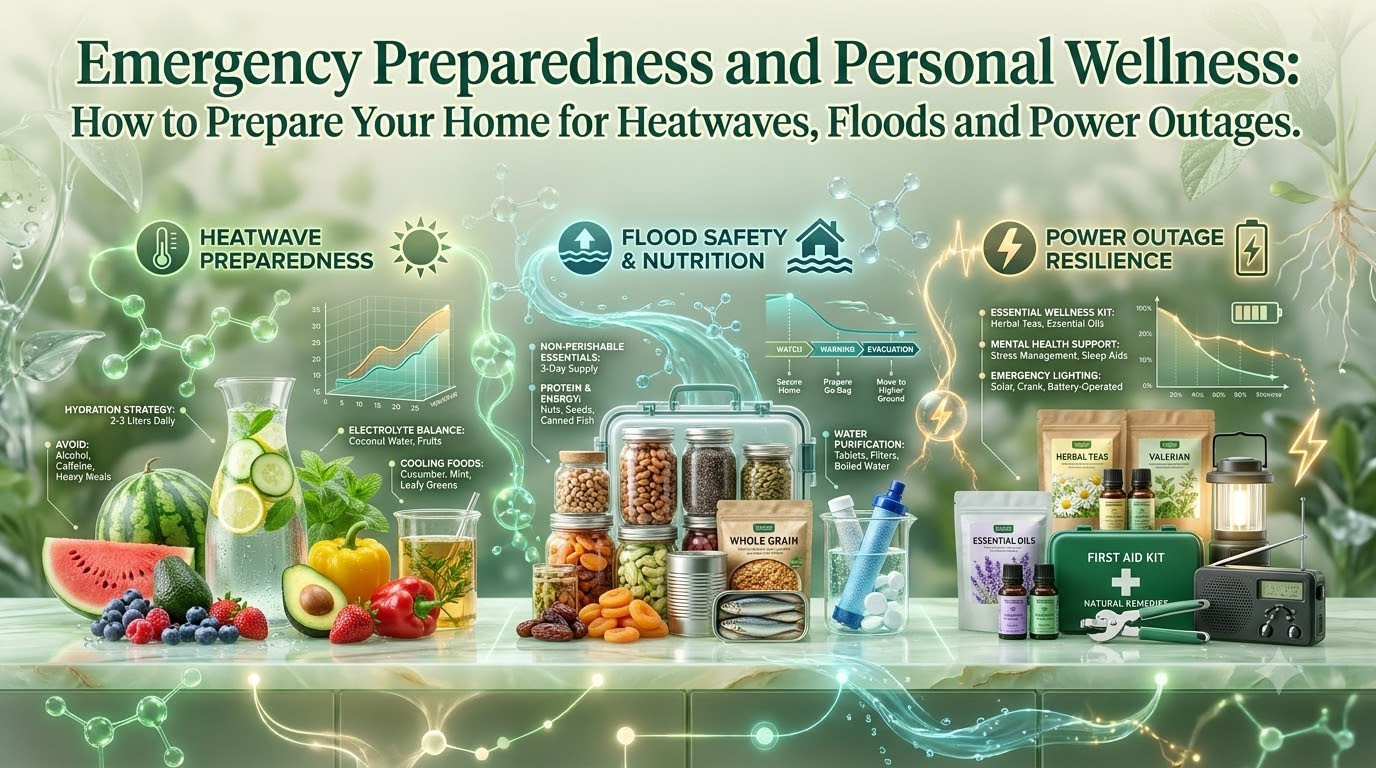
Emergency preparedness is often treated as a separate household task, something to think about only when a weather warning appears. In reality, preparing for heatwaves, floods and unexpected power outages is also part of protecting everyday health and well-being. A household with drinking water, essential medicines, reliable information, safe lighting and a clear communication plan is better positioned to respond when normal services are interrupted.
No checklist can remove every emergency risk. The aim is to reduce avoidable harm, make important decisions easier and help every household member understand what to do. The right preparation depends on local weather, housing, available services, family needs and instructions from emergency authorities.
- 1. Why Emergency Preparedness Is Part of Personal Wellness
- 2. Understand Your Household and Local Risks
- 3. Build a Practical Home Emergency Kit
- 4. Prepare Your Home for Heatwaves
- 5. Prepare for Floods and Heavy Rain
- 6. Plan for Power Outages
- 7. Protect Water, Food, Medicines and Personal Hygiene
- 8. Create a Family Communication and Evacuation Plan
- 9. Common Preparedness Myths, Mistakes and Safety Checks
- 10. Frequently Asked Questions and Final Takeaway
1. Why Emergency Preparedness Is Part of Personal Wellness
Personal wellness includes more than exercise, nutrition and sleep. It also involves the conditions that allow people to remain safe, maintain essential routines and access help when everyday services are disrupted. Extreme heat can make a home uncomfortable or unsafe. Floodwater can contaminate living spaces and interrupt transport. An electricity failure can affect refrigeration, communication, lighting, water systems and some medical equipment.
These events can create practical difficulties for everyone, but the impact may be greater for infants, older adults, pregnant people, outdoor workers, people with disabilities and individuals who depend on electricity-powered medical devices or temperature-sensitive medicines. A plan should therefore consider the needs of the people who actually live in the home rather than relying on a generic checklist.
To support indoor environmental safety during extreme weather events, review our clinical guide on Indoor Air Quality at Home: Pollutants & Ventilation.
2. Understand Your Household and Local Risks
Start by identifying the hazards that are realistic for your area. A household near a river, drain, low-lying road or waterlogged neighbourhood may need a more detailed flood plan. A home in a region that experiences very hot summers may need a heat-safety plan. Areas with unstable electricity supply, severe storms or infrastructure disruption may require additional power-outage preparation.
Use local government notices, weather department alerts and recognised disaster-management sources. In India, the India Meteorological Department provides weather information and warnings, while local authorities and disaster-management agencies issue area-specific instructions. Do not rely on forwarded messages or unverified social-media claims as the sole source of emergency information.
| Household Consideration | What to Prepare |
|---|---|
| Infants and young children | Age-appropriate food, nappies, clean water, familiar comfort items and caregiver contact details. |
| Older adults | Regular medicines, glasses, mobility aids, emergency contacts and a transport arrangement. |
| Disability or access needs | Accessible evacuation route, communication support, backup equipment and a helper if needed. |
| Medical equipment users | Power requirements, battery backup, supplier contact and a plan for relocation if electricity fails. |
| Pets | Food, water, leash or carrier, vaccination details and a pet-friendly evacuation option. |
3. Build a Practical Home Emergency Kit
A useful emergency kit should be easy to reach, clearly organised and checked regularly. Keep essential items in a waterproof bag or container where practical. Some supplies can be stored together, while medicines, documents and specialist equipment may need separate arrangements.
India's National Centre for Disease Control emergency-preparedness checklist advises households to keep supplies such as drinking water, non-perishable food, prescription medicines, a torch, batteries, a first-aid kit, communication equipment and important documents. The exact quantities a household needs will depend on family size, climate, storage conditions and local guidance.
- Safe Drinking Water: Sealed, regularly checked containers with a planning reference of at least 5 litres per person and pet per day.
- Non-Perishable Food: Shelf-stable items suitable for all family members, plus a manual can opener.
- Medical Supplies: Essential prescription medicines, a current medicine list, and first-aid kits.
- Electronics & Power: Battery-powered torches, spare batteries, and charged power banks.
- Documents: Identification, insurance policies, and medical records stored in waterproof pouches.
To support proper hydration planning and electrolyte management during emergencies, review our Science of Healthy Hydration Guide.
4. Prepare Your Home for Heatwaves
Heatwaves can place considerable stress on the body, particularly when high temperatures continue overnight or when humidity limits the body's ability to cool itself. A heat plan should include home cooling, hydration access, reduced exposure during the hottest hours and a way to check on people who may be at higher risk.
- Use curtains, blinds or shutters to reduce direct sunlight entering rooms during the hottest part of the day.
- Where outdoor air is cooler and safe, open windows to improve ventilation, particularly in the evening or early morning.
- Spend time in the coolest available room or a recognised cooling location if the home becomes dangerously hot.
- Wear light, loose-fitting clothing and use a cool damp cloth or shower when appropriate.
5. Prepare for Floods and Heavy Rain
Flood preparation begins before water enters a home. Heavy rainfall, overflowing drains, river flooding and flash floods can develop quickly. Water may contain sewage, chemicals, sharp objects and other contaminants. Moving floodwater can also hide open drains, damaged roads and electrical hazards.
- Identify local flood-prone roads, low-lying areas and official evacuation routes.
- Move important documents, medicines, electronic devices and valuables to a higher, dry location.
- Keep a waterproof emergency bag ready and make sure footwear is suitable for evacuation.
- Never walk, swim or drive through floodwater. Even shallow moving water can knock a person down.
For broader nutritional safety and hygiene guidelines during environmental disruptions, explore our Clinical Nutrition Master Guide.
6. Plan for Power Outages
Electricity interruptions can happen during storms, heatwaves, equipment failures or wider emergencies. Even a short outage can disrupt lighting, phone charging, cooking, water pumps and refrigeration. A longer outage may create additional risks for people who depend on powered medical devices or medicines that require controlled storage temperatures.
- Keep torches or battery-powered lanterns in known locations with spare batteries.
- Never run a generator indoors, in a garage, or on a balcony; always place generators outdoors away from windows and vents.
- Keep refrigerator and freezer doors closed as much as possible to preserve food safety.
7. Protect Water, Food, Medicines and Personal Hygiene
Emergency conditions can interrupt water supply, waste collection, refrigeration and access to pharmacies. Planning for these disruptions helps households maintain basic needs without taking unnecessary risks.
Store water in clean, food-grade containers away from chemicals and floodwater. Include soap, hand sanitiser, sanitary products, and waste bags in your emergency kit. Maintain an organized list of medications and consult healthcare professionals promptly if regular supplies are interrupted.
8. Create a Family Communication and Evacuation Plan
A family plan should be short enough to remember and detailed enough to guide action. Every household member should know how to receive warnings, where to meet, how to contact relatives and what to do if people become separated.
Choose one safe meeting point close to home and another outside the immediate neighbourhood. Appoint an out-of-area contact person to coordinate messages when local networks are strained.
9. Common Preparedness Myths, Mistakes and Safety Checks
| Common Preparedness Myth | Scientific Fact & Safety Reality |
|---|---|
| Myth 1: A small amount of floodwater is safe to cross. | Fact: Moving water can knock people down, hide hazards and sweep vehicles away. Avoid walking or driving through floodwater. |
| Myth 2: A fan always makes an extreme-heat room safe. | Fact: Fans may not provide adequate protection during dangerous indoor heat. Seek a cooler safe location when needed. |
| Myth 3: Food is safe if it smells normal after a long power cut. | Fact: Harmful contamination may not change smell or appearance. Discard items when safe storage cannot be confirmed. |
| Myth 4: A generator can be operated indoors if a window is open. | Fact: Generators must be operated outdoors, away from doors, windows and vents, because carbon monoxide can be fatal. |
| Myth 5: Emergency planning is only for disaster-prone areas. | Fact: Power cuts and weather interruptions can affect any community. A basic household plan is always valuable. |
10. Frequently Asked Questions (FAQ)
1. What should every home emergency kit contain?
A basic kit should include safe drinking water, non-perishable food, essential medicines, first-aid supplies, a torch, spare batteries, a charged power bank, hygiene items, important documents and written emergency contacts. Add supplies for children, older adults, people with disabilities and pets according to household needs.
2. How much water should a household store for an emergency?
Water needs vary by household size, climate, activity, health and sanitation requirements. India's NCDC emergency checklist uses at least five litres per person and pet per day as a planning reference and recommends a three-day supply. Follow local authority guidance and plan for additional needs where necessary.
3. What is the safest action during a flood warning?
Follow official warnings and evacuation instructions. Move to higher ground or an authorised shelter when directed. Never walk or drive through floodwater, and stay away from fallen electrical wires and submerged electrical equipment.
4. How long can food remain safe during a power outage?
CDC guidance says an unopened refrigerator generally keeps food cold for up to four hours. A full freezer may maintain safe temperatures for about 48 hours and a half-full freezer for about 24 hours. Actual food temperature matters. Never taste food to determine whether it is safe; discard items when safe storage cannot be confirmed.
5. How often should a family emergency plan be updated?
Review it regularly, such as during a monthly supply check and before local severe-weather seasons. Update contacts, medicines, meeting points, evacuation routes and arrangements whenever household circumstances change.
📚 Authoritative Clinical & Disaster References
- National Centre for Disease Control, India (NCDC): Emergency Preparedness Checklist
- National Centre for Disease Control (NCDC): Public Health Advisory on Extreme Heat and Heatwaves
- Directorate General of Fire Services, Civil Defence & Home Guards: Flood Safety Protocols
- Centers for Disease Control and Prevention (CDC): Preparing for Floods and Water Safety
- Centers for Disease Control and Prevention (CDC): Power Sources and Emergency Generator Safety