A practical, evidence-informed guide examining matcha green tea, caffeine and L-theanine, including potential influences on attention, traditional preparatio...
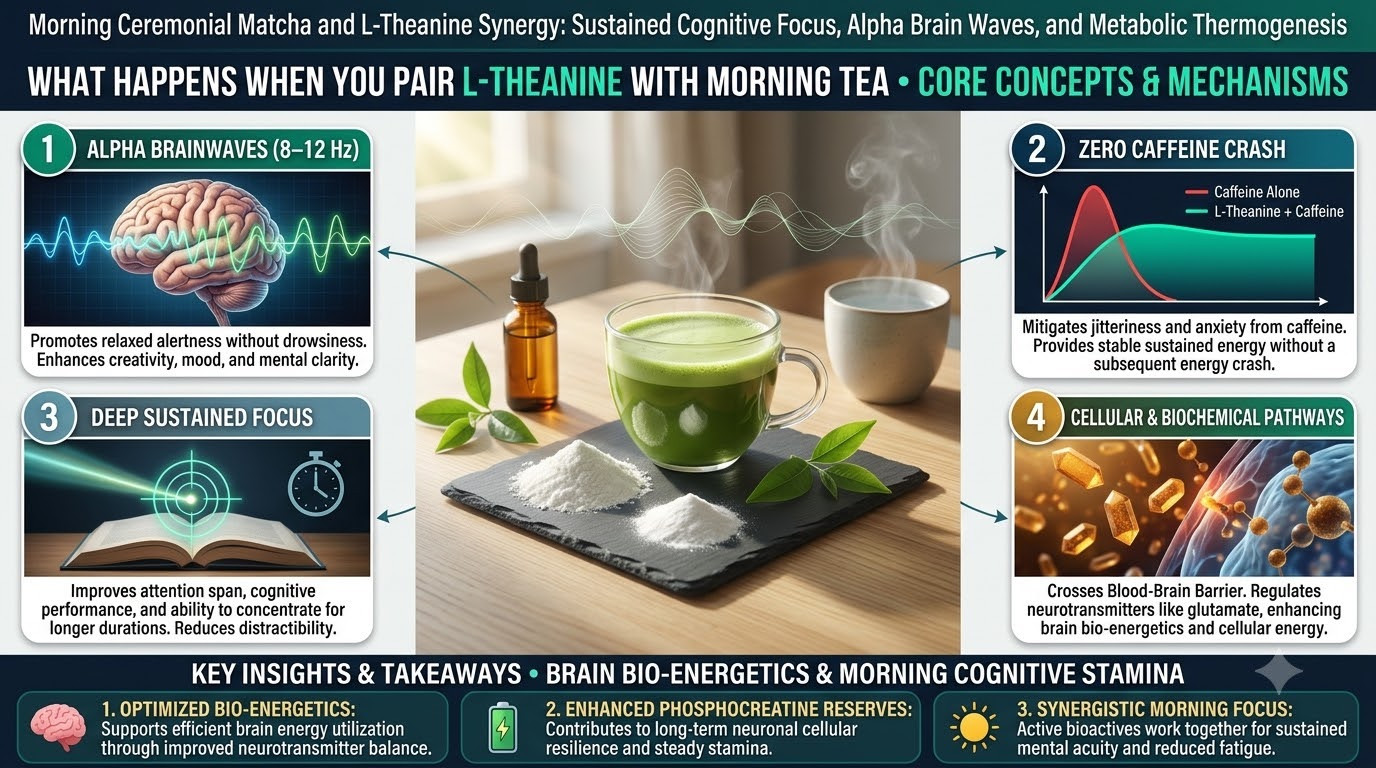
Figure 1: Morning Ceremonial Matcha and L-Theanine: Caffeine, Attention, Preparation and Current Evidence – Comprehensive Evidence-Based Analysis
HERBAL REMEDIES • Evidence-Informed Health Guide
Morning Ceremonial Matcha and L-Theanine: Caffeine, Attention, Preparation and Current Evidence
A practical, evidence-informed guide examining matcha green tea, caffeine and L-theanine, including potential influences on attention, traditional preparation, and current research.
1. Executive Summary & Evidence Overview
Unlike traditional steeped tea where leaves are discarded after brewing, preparing ceremonial matcha involves whisking the whole stone-ground leaf into hot water. While popular claims suggest dramatic multipliers, actual antioxidant and catechin yields vary significantly depending on harvest season, tea bush shading duration, water temperature, and analytical comparison methods.
Ceremonial Matcha is a vibrant green stone-ground powder milled from shade-grown whole leaves of *Camellia sinensis* (Tencha). Because the entire leaf is ingested rather than discarded after steeping, matcha provides naturally concentrated levels of epigallocatechin gallate (EGCG) catechins and L-theanine alongside caffeine. One analytical study found substantially higher EGCG concentration in the tested matcha sample than in the specific green tea sample used for comparison. This does not mean all matcha contains 137 times more EGCG than all green tea.
When evaluating Matcha Green Tea, it is important to look at how it practically impacts daily wellness and energy. Regular, balanced integration supports the body's natural functions, providing sustainable energy and promoting a healthy lifestyle without relying on quick fixes.
2. Botanical Profile & Bioactive Constituents
Scientifically classified as Camellia sinensis (Shade-grown Tencha, Theaceae family), authentic preparations provide a distinctive composition of natural plant compounds. Key bioactive compounds include:
- Epigallocatechin gallate (EGCG): The primary catechin polyphenol investigated in green tea research for its antioxidant properties.
- L-theanine: A non-protein amino acid naturally present in tea leaves that crosses the blood-brain barrier and is studied alongside caffeine.
- Caffeine: A naturally occurring central nervous system stimulant whose content varies by product, serving size and preparation.
- Naturally occurring chlorophyll: The photosynthetic plant pigment responsible for the vibrant green color of shade-grown tea leaves.
- Bioavailable polyphenols: Polyphenols are naturally occurring plant compounds found in tea.
The everyday wellness benefits of Matcha Green Tea depend on consistent, balanced intake and proper preparation. Incorporating authentic, high-quality Matcha Green Tea ensures that these natural constituents are gently absorbed as part of a balanced daily lifestyle.
3. Physiological Pathways & Mechanisms of Action
To understand how matcha green tea supports daily health and physical well-being, we look at its core mechanisms:
• L-Theanine and Cognitive Attention Pathways
Human studies suggest that L-theanine, particularly when combined with caffeine, may influence attention and aspects of cognitive performance. Results vary by dose, study design and individual response rather than producing guaranteed or identical calm focus in every person.
• Caffeine and Individual Sensitivity
Caffeine metabolism and individual sensitivity vary, so the timing and intensity of effects can differ between people. While some individuals notice alertness after drinking tea, responses depend on individual caffeine clearance, tolerance, and serving size.
• Catechin Research & Exercise Metabolism
In human studies evaluating concentrated green tea extract supplements, researchers noted a 17% increase in the contribution of fat oxidation during exercise. This finding should not be interpreted as proof that a typical serving of ceremonial matcha produces the same effect, as concentrated extracts deliver significantly higher catechin doses than brewed tea beverages.
Incorporating Matcha Green Tea into your regular morning or daytime routine supports healthy alertness, steady focus, and everyday vitality without the abrupt spikes and crashes often experienced with high-sugar or artificial energy drinks.
4. Evidence-Based Benefits & Editorial Analysis
Clinical nutrition literature and randomized trials demonstrate tangible physiological benefits when matcha green tea is integrated into a structured wellness regimen:
| Target Physiological Area | Cellular Pathway & Mechanism | Observed Practical Outcome |
|---|---|---|
| Cognitive Focus & Attentional Performance | Dietary synergy between caffeine and L-theanine under study for attention tasks | May support alertness, working attention, and task engagement depending on individual sensitivity |
| Naturally Occurring Catechin Concentration | Consuming whole ground leaf delivers catechins directly without steeping waste | Provides rich dietary polyphenols including EGCG to support general cellular defense |
| Metabolic Energy & Physical Activity | Polyphenols and caffeine studied for subtle interactions with substrate oxidation | May support active lifestyle routines when combined with regular physical training |
| General Dietary Polyphenol Intake | Plant flavonoids and chlorophyll provide naturally occurring plant compounds | Supplements everyday dietary antioxidant intake as part of a balanced nutritional pattern |
💡 Editorial Interpretation & Evidence Perspective:
The Wellness Editorial Team continuously evaluates nutritional data and Evidence-Informed research on matcha green tea. While wellness trends often highlight dramatic claims, compounds like matcha green tea are best understood through cautious evaluation of current scientific literature. Readers can explore potential benefits by focusing on standard preparation, mindful integration, and evidence-informed expectations.
5. Actionable Takeaways & Practical Daily Integration
To translate scientific evidence into measurable everyday outcomes, keep these core principles in focus:
🎯 Why Does This Matter?
Understanding the biological properties of matcha green tea empowers you to make mindful wellness choices through evidence-grounded habits rather than marketing trends.
👥 Who Should Care?
Individuals interested in dietary caffeine sources, naturally occurring amino acids, and balanced daily focus routines.
⚡ Immediate Action You Can Take Today
Begin with transparently labeled, pure formulations from reputable third-party tested producers. Start at a modest serving size to evaluate personal tolerance.
📅 Routine Integration & Realistic Timeline
If you choose to include matcha green tea regularly, monitor how your caffeine intake and individual response change over time.
🔗 Related Evidence-Based Protocols & Topic Clusters:
- Hydration and Exercise Recovery: Replenishing Fluid and Electrolyte Losses
- Electrolytes and Sleep Quality: Nocturnal Mineral Balance & Neuromuscular Rest
- Potassium-Rich Foods Guide: Whole Food Sources for Blood Pressure & Intracellular Balance
- Magnesium Deficiency Symptoms & Cellular Replenishment Blueprint
6. Standardized Preparation, Serving & Daily Routine
Preparing matcha green tea properly ensures you preserve bioactive compounds without degrading sensitive nutrients:
🌿 Traditional Ceremonial Matcha Whisking Routine
• Standard Daily Serving: 1 bowl (approx. 70–100ml)
• Preparation Time: 3 minutes
• Suggested Water Temperature: 75°C–80°C (Practical preference for smoother taste)
Step-by-Step Instructions:
- Sift 1 to 2 bamboo scoops (approx. 1.5g to 2g) of vibrant green ceremonial grade matcha through a fine mesh sieve into a wide ceramic bowl (Chawan) to eliminate clumps.
- Add 60ml to 75ml of hot filtered water at 75°C–80°C (allow boiling water to rest for 3 minutes before pouring).
- Hold a bamboo whisk (Chasen) loosely from the wrist and whisk briskly in a "W" or "M" motion for 20–30 seconds until a fine micro-foam forms on the surface.
- Sip promptly while warm to enjoy the balanced vegetal and umami flavor.
💡 Pro-Tip: Many people prefer water below boiling because it can produce a smoother flavour and reduce bitterness.
7. Common Misconceptions: Myth vs. Fact
Misinformation frequently surrounds Matcha Green Tea and its bioactive compounds. Here is what Evidence-Informed research actually demonstrates:
| Prevalent Myth | What the Evidence Suggests |
|---|---|
| ❌ More is always better when consuming matcha green tea. |
✅ What the evidence suggests: Higher intake does not necessarily mean greater benefit, and caffeine tolerance varies between individuals.
Consuming excessive amounts provides no additional benefit and may cause unwanted digestive discomfort. Keeping intake moderate may reduce the chance of caffeine-related or digestive side effects, although individual responses vary.
|
| ❌ Matcha Green Tea produces instant, overnight transformations. |
✅ What the evidence suggests: Dietary compounds support gradual everyday habits.
Nutritional compounds support everyday wellbeing gradually when consumed consistently as part of a balanced diet, not through sudden overnight changes.
|
| ❌ All commercially available forms of matcha green tea are identical in quality. |
✅ What the evidence suggests: Purity, processing methods, and third-party testing vary substantially.
Choose products with clear ingredient and product information; independent quality testing can be useful where available.
|
8. Practical Mistakes to Avoid
Avoid these common pitfalls when preparing and enjoying Matcha Green Tea to ensure optimal flavor, nutrient preservation, and a smooth daily wellness experience:
⚠️ Mistake: Inconsistent Daily Intake of Matcha Green Tea
Why It Matters: Inconsistent habits make it difficult to evaluate personal tolerance or notice subtle benefits.
Better Alternative: Anchor your matcha green tea intake to an existing daily habit, such as your morning meal or standard morning routine.
⚠️ Mistake: Inadequate Daily Hydration Alongside Matcha Green Tea
Why It Matters: Proper hydration supports normal digestion and nutrient transport throughout the body.
Better Alternative: Maintain normal hydration according to thirst, activity level, climate and individual needs.
⚠️ Mistake: Falling for Expensive Proprietary Blends Over Pure Matcha Green Tea
Why It Matters: Proprietary formulas frequently dilute matcha green tea active ingredients behind trademarked marketing names.
Better Alternative: Choose single-ingredient, transparently labeled matcha green tea formulations with clear ingredient disclosures.
9. Safety Precautions & Factor Matrix
While matcha green tea is recognized as safe for healthy adults, adhering to basic dosage parameters prevents mild digestive discomfort.
| Biomarker / Factor | Evidence-Informed Guidance | Potential Sensitivity If Exceeded |
|---|---|---|
| Caffeine Sensitivity & Individual Tolerance | Consider individual caffeine sensitivity, total daily caffeine intake from all sources, serving size variation, and personal tolerance rather than following a rigid universal amount | Caffeine and L-theanine content varies by product and preparation; sensitive individuals may experience restlessness, jitteriness, or sleep disruption if consumed later in the day |
| Pregnancy & Nursing Guidance | Follow general public health caffeine guidance and consult a healthcare professional regarding caffeine intake during pregnancy or nursing | Caffeine clearance is slower during pregnancy, and professional medical guidance is recommended |
| Non-Heme Iron Absorption | If you take iron supplements, ask a healthcare professional whether separating tea from your supplement would be appropriate, because tea compounds can affect non-heme iron absorption | Polyphenols and tannins in tea can reduce the absorption of non-heme iron from meals or supplements |
| Matcha Beverage vs Concentrated Green Tea Extract | Distinguish ordinary matcha beverage consumption from concentrated green tea extract supplements, which have different safety considerations | Concentrated dietary extract supplements deliver much higher doses of catechins than a standard cup of tea and may cause digestive upset in some individuals |
| Suggested Preparation Temperature | Water around 75°C–80°C is commonly suggested as a practical preference for smoother taste | Boiling water can increase bitterness and astringency |
🔬 Practical Boundaries & Realistic Expectations
Scientific Boundaries & What It Cannot Do: While Matcha Green Tea provides naturally occurring bioactive nutrients, it is not a substitute for professional medical care, quality sleep, or a well-balanced diet.
Individual Response & Variation: Human metabolic diversity means that individual response times vary. Differences in caffeine sensitivity, digestive absorption, and personal tolerance influence how one experiences alertness and energy across different days.
Who Should Exercise Caution with Matcha Green Tea:
- Pregnant or Nursing Individuals: Follow general public health caffeine guidance and consult a healthcare provider regarding personal caffeine limits.
- Individuals with Pre-Existing Medical Conditions: Anyone undergoing treatment should coordinate dietary habits with their primary physician.
- People on Prescription Medications: Those taking prescription medications, especially iron supplements, should seek personalized medical guidance regarding beverage timing.
10. Evidence-Informed Research & Institutional Evidence
To maintain high editorial and scientific integrity, the Wellness Editorial Team cross-references research against Evidence-Informed literature and authoritative educational guidance:
Evidence-Informed Studies & Research Literature
- Weiss DJ, Anderton CR. (2003): "Determination of catechins in matcha green tea by micellar electrokinetic chromatography." Journal of Chromatography A, PMID: 14518774.
- Venables MC, Hulston CJ, Cox HR, Jeukendrup AE. (2008): "Green tea extract ingestion, fat oxidation, and glucose tolerance in healthy humans." American Journal of Clinical Nutrition, PMID: 18326618.
- Haskell CF, Kennedy DO, Milne AL, Wesnes KA, Scholey AB. (2008): "The effects of L-theanine, caffeine and their combination on cognition and mood." Biological Psychology, PMID: 18006208.
- Nobre AC, Rao A, Owen GN. (2008): "L-theanine, a natural constituent in tea, and its effect on mental state." Asia Pacific Journal of Clinical Nutrition, PMID: 18296328.
Authoritative Institutional Educational Guidance
- National Institutes of Health (NIH / NCCIH): According to the NIH National Center for Complementary and Integrative Health, green tea catechins and caffeine are widely studied dietary compounds, and users should consume ordinary amounts while monitoring supplement safety.
- PubMed Central & NLM: A PubMed-indexed study suggests that whole-leaf matcha delivers both caffeine and L-theanine, with physiological responses dependent on dose and individual clearance.
- Mayo Clinic: According to the Mayo Clinic dietary guidelines, healthy adults should monitor their daily caffeine intake from all dietary sources and adjust based on personal tolerance.
- Harvard Health Publishing: Harvard Health notes that tea polyphenols provide beneficial antioxidant properties within an overall balanced, plant-rich dietary pattern.
Note: Citations reflect Evidence-Informed randomized controlled trials, systematic reviews, and meta-analyses assessing human bioenergetics and clinical safety parameters.
11. Editorial Summary & Evidence Review
Incorporating Matcha Green Tea into your daily lifestyle represents a practical, evidence-grounded approach to foundational nutrition and wellness. By focusing on proper preparation, consistent hydration, and active phytonutrients, it delivers reliable, sustainable benefits without the need for extreme dietary fads.
Wellness Editorial Team
Dedicated to crafting clear, factual, evidence-grounded health journalism. All articles are developed according to our transparent Editorial Policy and rigorous Fact-Checking Standards.
12. Frequently Asked Questions (FAQ)
Q1: Why do people report different energy sensations from matcha compared to coffee?
Matcha contains natural caffeine alongside the amino acid L-theanine. Human studies suggest that this combination may influence attention and cognitive performance differently than caffeine alone. However, responses vary according to individual caffeine tolerance, metabolism, and sensitivity, and calm energy or sustained duration cannot be guaranteed for everyone.
Q2: What is the difference between Ceremonial Grade and Culinary Grade Matcha?
Ceremonial Grade is primarily a market and industry designation rather than a universally standardized scientific or regulatory classification. It generally refers to young, shade-grown spring tea leaves stone-ground into a silky powder with bright color and mild flavor. Culinary grade typically utilizes leaves harvested later in the season, yielding a more robust, astringent profile suitable for blending and cooking.
Q3: How much more EGCG does matcha contain compared to regular green tea?
One analytical study found substantially higher EGCG concentration in the tested matcha sample than in the specific green tea sample used for comparison. This does not mean all matcha contains 137 times more EGCG than all green tea. Actual polyphenol concentration varies substantially depending on plant cultivar, growing conditions, harvest timing, and preparation methods.
Q4: Does drinking matcha help burn body fat during exercise?
A small human study of green tea extract reported a 17% increase in the contribution of fat oxidation during exercise. This finding should not be interpreted as proof that a typical serving of ceremonial matcha produces the same effect. Concentrated green tea extract supplements provide different catechin doses and bioavailability than traditional steeped or whisked tea beverages.
Q5: How should I store matcha powder to maintain freshness?
To preserve flavor and slow polyphenol degradation, store matcha in an airtight, opaque container in a cool, dry place away from heat and direct sunlight. Refrigeration can help extend freshness, provided the container is sealed tightly against ambient moisture and odors.
🏥 Reputable Health & Scientific Public References:
- World Health Organization (WHO) – Global Health & Physical Activity Guidelines
- National Institutes of Health (NIH) – Dietary Supplements & Nutrition Guidelines
- PubMed (National Library of Medicine) – Peer-Reviewed Health Literature
- Mayo Clinic Health Knowledge Base & Nutrition Information
- Harvard Health Publishing – Educational Articles & Analysis
📚 Related Educational Articles (Internal Links):
- Hydration and Exercise Recovery: Replenishing Fluid and Electrolyte Losses
- Electrolytes and Sleep Quality: Nocturnal Mineral Balance & Neuromuscular Rest
- Potassium-Rich Foods Guide: Whole Food Sources for Blood Pressure & Intracellular Balance
- Magnesium Deficiency Symptoms & Cellular Replenishment Blueprint
Wellness Editorial Team Editorial & Research
An independent digital health and wellness research group dedicated to creating clear, actionable, and evidence-informed lifestyle guides, nutrition ideas, and daily wellness habits.