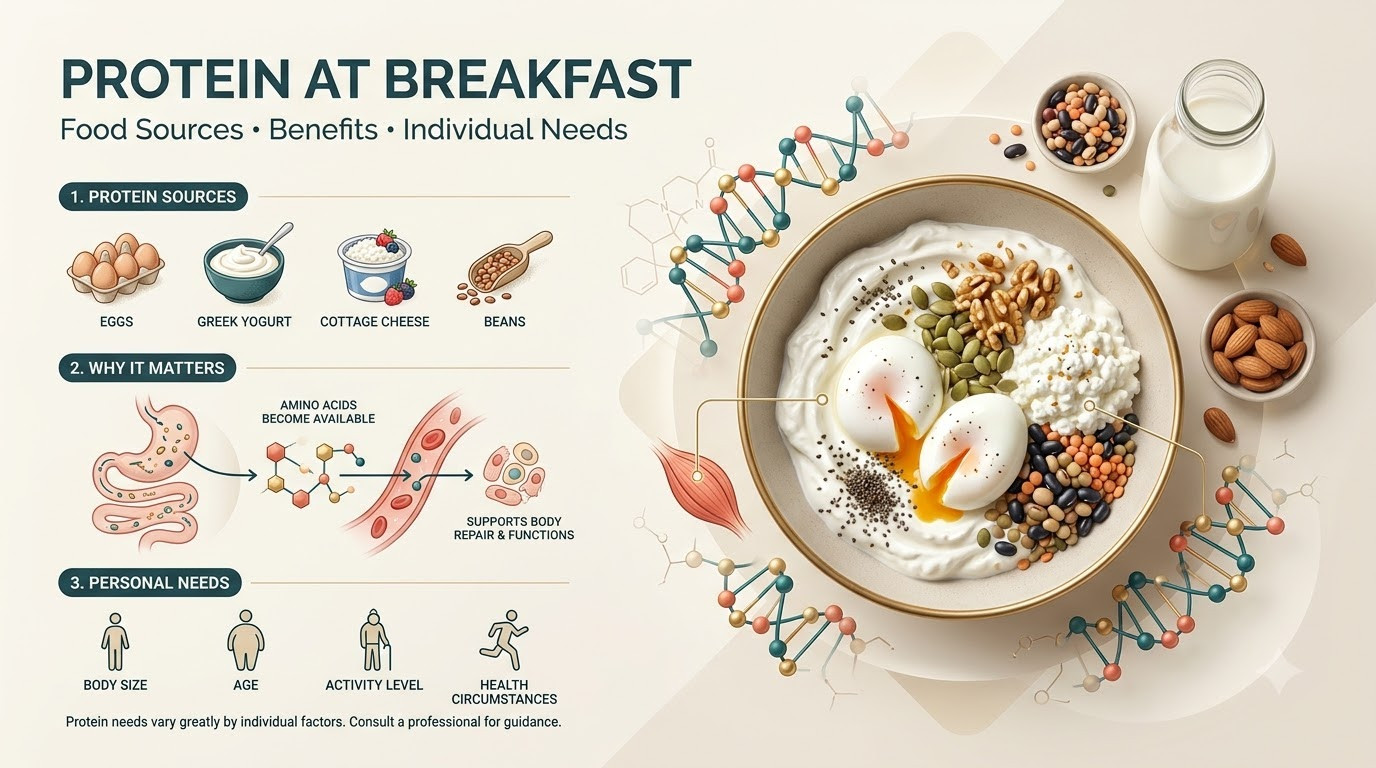
Breakfast is an opportunity to give your body nutrients it can use throughout the day. Protein deserves a place in that conversation because it helps maintain muscles, supports tissue repair and contributes to many essential body functions. Yet a protein-rich breakfast does not need to involve expensive powders, complicated recipes or an oversized meal.
Simple options such as eggs, plain Greek yogurt, cottage cheese, milk, tofu, beans and nut butter can help you include protein in a familiar breakfast. The best choice depends on your preferences, appetite, budget, dietary pattern and overall nutritional needs.
1. Why Protein Matters at Breakfast
Protein is made from amino acids, which the body uses to build and maintain tissues. These include muscles, skin and other structures. Proteins also contribute to enzymes, hormones, immune functions and the transport of substances throughout the body.
Dietary protein comes from foods such as eggs, dairy products, fish, poultry, beans, lentils, soy foods, nuts and seeds. During digestion, proteins are broken down into amino acids and smaller peptides that the body can absorb and use.
Eating protein at breakfast is one way to distribute protein-containing foods across your daily meals. It can be especially useful if your usual morning meal consists mainly of sweetened coffee, pastries or refined cereal and leaves little room for more nutrient-dense foods.
However, breakfast is not a magical metabolic window. You do not have to eat protein immediately after waking, and a person who prefers a later first meal can still meet their needs through an appropriate overall eating pattern. The important consideration is whether your diet provides sufficient protein and a broad range of nutrients over time.
2. Potential Benefits of a Protein-Rich Breakfast
1. Helps maintain muscle and other body tissues
Your body continually repairs and replaces proteins in its tissues. Dietary protein supplies amino acids needed for these processes. Getting enough protein, alongside suitable physical activity, is particularly relevant for people who perform resistance training, older adults concerned about maintaining strength and anyone whose usual diet provides too little protein.
A breakfast containing eggs, yogurt, tofu or beans can contribute to your daily total. Nevertheless, a single protein-rich meal cannot guarantee muscle growth. Muscle development also depends on training, energy intake, recovery, sleep and overall dietary adequacy.
2. May help you feel satisfied after eating
Protein can contribute to feelings of fullness after a meal by stimulating satiety hormones such as peptide YY (PYY) and glucagon-like peptide-1 (GLP-1) while suppressing ghrelin. A breakfast containing protein, fiber and adequate food volume may feel more satisfying than a meal made mostly of rapidly eaten refined carbohydrates.
3. Makes a balanced meal easier to build
Protein-rich foods supply essential micronutrients beyond protein itself: eggs deliver choline; dairy products provide calcium and vitamin B12; legumes supply prebiotic fiber and iron; and nuts offer monounsaturated fats. Pairing these with whole grains or berries ensures comprehensive nutrition.
4. Can support an active lifestyle
People who exercise regularly need protein as part of their total daily nutrition to facilitate muscle protein synthesis (MPS). Consuming 20 to 30 grams of protein containing adequate leucine (around 2 to 3 grams) stimulates muscle repair and cellular recovery efficiently.
3. Best Protein-Rich Breakfast Foods
| Food Source | Nutritional Advantage | Practical Breakfast Idea |
|---|---|---|
| Whole Eggs | Complete protein (~6g per egg) with choline and vitamin B12. | Boiled or poached eggs on whole-grain sourdough with spinach. |
| Plain Greek Yogurt | Dense protein (~15–20g per cup) with probiotic cultures. | Layered with rolled oats, chia seeds, and wild blueberries. |
| Cottage Cheese | Slow-digesting casein protein (~25g per cup) and calcium. | Served savory with sliced cherry tomatoes and cracked pepper. |
| Tofu & Tempeh | Complete plant protein with isoflavones and low saturated fat. | Tofu scramble with turmeric, peppers, and whole-wheat toast. |
| Beans & Lentils | Plant-based protein combined with rich prebiotic fiber. | Warm black beans in a breakfast wrap with avocado and salsa. |
| Nuts & Seeds | Healthy unsaturated fats, zinc, magnesium, and plant protein. | Stirred into morning steel-cut oats or topped on fruit bowls. |
4. Easy Protein-Rich Breakfast Combinations
- Yogurt, Oats, and Berries: Combine unsweetened Greek yogurt with raw rolled oats, fresh berries, and a sprinkle of pumpkin seeds.
- Eggs, Greens, and Whole-Grain Toast: 2 eggs prepared to preference, served with sautéed spinach and a slice of sprouted grain bread.
- Tofu and Vegetable Scramble: Crumbled firm tofu seasoned with nutritional yeast and turmeric, sautéed with bell peppers and onions.
- Savory Cottage Cheese Bowl: Low-fat cottage cheese paired with diced cucumbers, tomatoes, and whole-grain crackers.
- Bean and Avocado Breakfast Wrap: Spiced pinto or black beans wrapped in a whole-wheat tortilla with light cheddar and salsa.
5. How Much Protein Do You Need at Breakfast?
There is no rigid gram requirement that applies universally to every individual. The baseline Recommended Dietary Allowance (RDA) for sedentary adults is 0.8 grams per kilogram of body weight per day (approximately 56g daily for a 70 kg adult). However, active adults, athletes, and older adults aiming to preserve muscle mass typically thrive on 1.2 to 2.0 grams per kg per day.
Distributing protein evenly across the day—such as aiming for 20 to 35 grams of protein at breakfast—helps maximize muscle protein synthesis and sustains steady energy levels through the morning.
6. Common Protein Breakfast Mistakes
- Eliminating Fiber: A breakfast of only meat or eggs without fiber can impair digestion and microbiota diversity. Always include fruit, oats, or vegetables.
- Relying Exclusively on Ultra-Processed Bars: Many commercial protein bars carry high levels of added sugars, refined palm oil, and synthetic additives. Prioritize whole food sources first.
- Overlooking Hidden Sodium: Processed breakfast meats (bacon, sausage) contain excessive nitrates and sodium. Favor eggs, beans, or dairy.
7. Safety and Special Considerations
- Chronic Kidney Disease (CKD): Patients with renal insufficiency or reduced eGFR must moderate protein intake under clinical guidance, as excess nitrogenous waste increases renal workload.
- Food Allergies & Intolerances: Individuals with dairy allergies or lactose intolerance should choose fortified soy milk, pea protein, or lactose-free kefir.
- Gout & Hyperuricemia: Those prone to uric acid stones or gout flares should balance purine-rich protein sources with adequate hydration.
Frequently Asked Questions
1. Is eating protein at breakfast healthy?
For most people, including a suitable protein source at breakfast can contribute to daily protein needs and make a meal more balanced. Eggs, plain yogurt, tofu, beans, milk and nut butter are examples. The best choice depends on your health, preferences and overall diet.
2. What is the best high-protein breakfast food?
There is no single best food for everyone. Greek yogurt, eggs, cottage cheese, tofu, beans and soy milk are useful options. Compare serving sizes and nutrition labels, and choose foods that fit your dietary needs, budget and taste.
3. Can a protein-rich breakfast help with weight management?
Protein may help some people feel fuller after eating, and a balanced breakfast can support a consistent eating routine. However, no specific breakfast guarantees weight loss. Overall energy intake, food quality, physical activity, sleep and other factors all influence weight management.
4. Do I need a protein shake in the morning?
No. Many people can obtain enough protein from foods such as eggs, yogurt, milk, tofu, beans and nuts. A shake may be convenient in some circumstances, but it is not essential for everyone. Check product labels and seek professional advice if you have medical or dietary restrictions.
5. Is plant-based protein enough for breakfast?
Yes. Foods such as tofu, soy milk, beans, lentils, nuts and seeds can contribute protein to a plant-based breakfast. Eat a variety of protein-containing foods throughout the day to obtain essential amino acids and other nutrients. A well-planned plant-based diet can meet protein needs.
📚 Evidence and Further Reading
- Harvard T.H. Chan School of Public Health. The Nutrition Source: Protein. Clinical guide to protein quality, food sources, and chronic disease prevention. Read Harvard Nutrition Source Guide.
- National Library of Medicine (MedlinePlus). Protein in Diet. Dietary reference intakes, digestion physiology, and daily recommendations. Read MedlinePlus Diet Overview.
- Harvard Health Publishing. Healthy Breakfast Ideas and Protein Distribution. Nutritional strategies for satiety and daily energy management. Read Harvard Health Breakfast Guide.