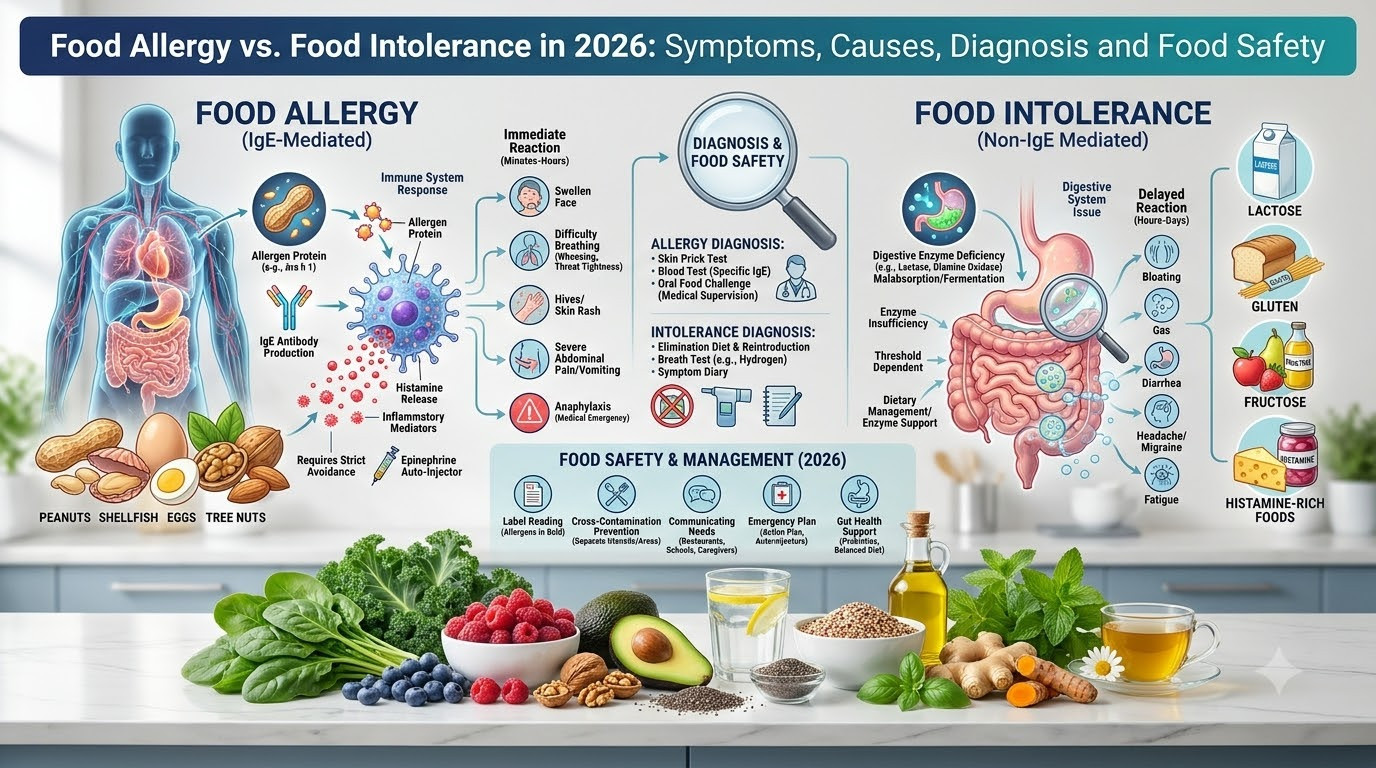
Food can evoke strikingly disparate physiological responses across different individuals. One person consumes cow's milk without issue, while another experiences severe abdominal cramping, flatulence, and osmotic diarrhoea shortly after consumption. A third individual, exposed to minute traces of dairy protein, develops rapid urticaria, laryngeal edema, and acute bronchospasm. While casual conversation frequently categorizes all adverse food experiences as "allergies," clinical medicine establishes a vital boundary between immunological hypersensitivity and non-immunological digestive intolerance.
Two medical conditions are consistently conflated in public discourse: food allergy and food intolerance. A food allergy is driven by an aberrant immune response directed against specific dietary proteins—most commonly mediated by immunoglobulin E (IgE). In contrast, food intolerance stems from non-immune mechanisms, such as digestive enzyme deficits (e.g., lactase deficiency), chemical pharmacological sensitivities (e.g., histamine or caffeine), or malabsorption of short-chain fermentable carbohydrates.
In 2026, the widespread availability of direct-to-consumer antibody panels, home testing kits, and extreme dietary elimination protocols has created widespread diagnostic confusion. Misinterpreting normal digestive discomfort as an allergy leads many individuals to unnecessarily remove entire nutritional food groups, inducing micronutrient deficiencies and anxiety around food.
This clinical review outlines the biological mechanisms of food-induced allergic cascades, profiles common food intolerances, differentiates coeliac disease from gluten sensitivity, details valid diagnostic standards, and provides practical kitchen safety and food-labelling protocols.
- 1. Food Allergy vs. Food Intolerance: The Main Difference
- 2. What Happens During a Food Allergic Reaction?
- 3. Common Food Intolerances and Their Causes
- 4. Symptoms, Timing and Warning Signs
- 5. Common Food Triggers and Individual Differences
- 6. Coeliac Disease, Wheat Allergy and Gluten Sensitivity
- 7. How Food Allergies and Intolerances Are Diagnosed
- 8. Food Management, Nutrition and Safe Substitutions
- 9. Food Labels, Cross-Contact and Dining Out Safely
- 10. A Practical Food-Safety Plan, Myths & FAQ
1. Food Allergy vs. Food Intolerance: The Main Difference
A food allergy is an adverse health effect arising from a specific, reproducible immune response triggered by dietary exposure. In classical immediate-type reactions, the adaptive immune system generates allergen-specific immunoglobulin E (sIgE) directed against antigenic epitopes within food proteins. Subsequent ingestion cross-links these antibodies on tissue mast cells and circulating basophils, releasing preformed vasoactive mediators. The biological consequence can compromise the cutaneous, gastrointestinal, respiratory, and cardiovascular systems simultaneously.
However, immunological reactions are not exclusively IgE-mediated. Non-IgE-mediated food allergies—such as Food Protein-Induced Enterocolitis Syndrome (FPIES) or Eosinophilic Esophagitis (EoE)—involve cellular pathways, including T-cell activation and eosinophilic tissue infiltration. These conditions typically manifest with delayed gastrointestinal symptoms, underscoring that the absence of immediate hives does not entirely exclude an immunological condition.
Food intolerance represents a fundamentally different clinical entity. It encompasses non-immunological adverse reactions to foods, beverages, or dietary additives. The overwhelming majority of food intolerances stem from metabolic enzyme insufficiencies. For instance, in primary adult-type hypolactasia (lactose intolerance), the enterocytes of the small intestine downregulate brush-border lactase production. Ingested lactose remains unhydrolyzed, drawing water into the intestinal lumen via osmosis and fermenting into methane, hydrogen, and short-chain fatty acids within the colon.
| Clinical Parameter | Food Allergy (IgE-Mediated) | Food Intolerance |
|---|---|---|
| Underlying Mechanism | Immune system hypersensitivity (IgE antibodies or T-cells) | Non-immunological (enzymatic deficit, pharmacological, transport failure) |
| Triggering Component | Dietary proteins (e.g., casein, ovalbumin, Ara h 1) | Sugars, fermentable carbs, bioactive amines (e.g., lactose, histamine) |
| Threshold Dose | Microscopic traces can precipitate severe systemic reactions | Strictly dose-dependent; small amounts are frequently tolerated |
| Onset of Symptoms | Rapid: within seconds to 2 hours post-ingestion | Gradual: typically 2 to 24 hours post-ingestion |
| Severity & Fatality Risk | Potentially life-threatening (anaphylactic shock, airway closure) | Uncomfortable, painful, but non-anaphylactic |
| Clinical Management | Total avoidance, emergency epinephrine auto-injector prescription | Portion moderation, enzyme supplementation (e.g., lactase drops) |
Accurate differentiation prevents hazardous diagnostic errors. Treating a life-threatening peanut allergy as a simple intolerance can lead to fatal accidental exposures. Conversely, treating lactose intolerance as a milk allergy forces unnecessary complete elimination of dairy products, placing bone mineral density at long-term risk.
2. What Happens During a Food Allergic Reaction?
The pathophysiology of an IgE-mediated food allergic reaction unfolds in two distinct phases: sensitization and clinical effector activation.
During the sensitization phase, a genetically predisposed individual encounters an intact dietary protein across the intestinal or cutaneous mucosal barrier. Antigen-presenting cells internalize the protein and present peptide fragments to naive CD4+ T cells, polarizing them into Th2 helper cells. These Th2 cells secrete interleukin-4 (IL-4) and interleukin-13 (IL-13), inducing B-cell class-switching to synthesize allergen-specific IgE antibodies. These sIgE antibodies bind with exceptionally high affinity to FcεRI receptors on the surface of tissue mast cells and basophils.
Upon re-exposure to the culprit food, multivalent allergen proteins cross-link adjacent IgE molecules on the sensitized cell membranes. This initiates explosive degranulation within minutes, discharging massive quantities of preformed and de novo biochemical mediators:
- Histamine: Binds to H1 and H2 vascular receptors, inducing rapid arteriolar vasodilation, increased capillary permeability, localized tissue edema, and sensory nerve stimulation (pruritus).
- Prostaglandins (PGD2) & Leukotrienes (LTC4, LTD4): Potent lipid mediators triggering intense bronchial smooth-muscle bronchospasm, mucus hypersecretion, and coronary vasoconstriction.
- Platelet-Activating Factor (PAF): Directly correlates with anaphylactic severity by accelerating vascular leakage and myocardial depression.
3. Common Food Intolerances and Their Causes
Unlike food allergies, which share common immunological pathways, food intolerances encompass diverse physiological mechanisms:
Primary and Secondary Lactase Deficiency
Lactose is a disaccharide requiring cleavage into glucose and galactose by the brush-border enzyme lactase-phlorizin hydrolase. Genetically programmed lactase non-persistence affects roughly 65% to 70% of the global adult population. Secondary lactase deficiency can also emerge temporarily following acute gastroenteritis, untreated coeliac enteropathy, or small intestinal bacterial overgrowth (SIBO) due to mucosal brush-border shedding.
FODMAP Malabsorption
Fermentable Oligosaccharides, Disaccharides, Monosaccharides, and Polyols (FODMAPs) are short-chain carbohydrates with poor intestinal absorption kinetics. In individuals with visceral hypersensitivity—common in Irritable Bowel Syndrome (IBS)—these unabsorbed molecules exert an osmotic pull in the small bowel before undergoing rapid bacterial fermentation in the colon. The resulting distension causes bloating, sharp cramping, and altered transit times.
Histamine Intolerance
Histamine intolerance results from an imbalance between accumulated dietary histamine and the body's enzymatic degradation capacity. Diamine oxidase (DAO) in the intestinal mucosa serves as the primary barrier against exogenous histamine. When DAO activity is impaired genetically or inhibited by medications (such as certain NSAIDs or antidepressants), consuming aged cheeses, cured meats, fermented beverages, or canned seafood can induce flushing, headaches, rhinorrhea, and intestinal discomfort.
4. Symptoms, Timing and Warning Signs
Differentiating food reactions relies heavily on chronological symptom tracking. While both allergies and intolerances can cause gastrointestinal distress, their systemic manifestations diverge sharply.
| Organ System | Food Allergy Presentation | Food Intolerance Presentation |
|---|---|---|
| Cutaneous (Skin) | Acute urticaria (hives), pruritus, flushing, angioedema of face/lips | Rare; non-specific flushing in histamine sensitivity only |
| Respiratory | Bronchospasm, wheezing, laryngeal tightness, repetitive coughing | None (respiratory compromise excludes simple intolerance) |
| Gastrointestinal | Sudden emesis, severe abdominal cramping, profuse watery diarrhea | Gradual abdominal distension, excessive flatulence, loose stools |
| Cardiovascular | Hypotension, reflex tachycardia, dizziness, syncope, shock | None |
Clinical "red flag" symptoms that demand prompt medical investigation include unintentional weight loss, hematochezia (blood in stool), dysphagia (difficulty swallowing), nocturnal awakening due to pain, and persistent emesis. These signs indicate structural organic disease rather than uncomplicated functional food intolerance.
5. Common Food Triggers and Individual Differences
Globally, nine major food groups account for more than 90% of all IgE-mediated food allergic reactions, often classified by regulatory authorities as the "Big 9":
- Peanuts: Legume proteins (Ara h 1, Ara h 2) known for exceptionally high heat stability and severe anaphylaxis risk.
- Tree Nuts: Almonds, walnuts, cashews, pistachios, and hazelnuts, which exhibit variable cross-reactivity.
- Cow's Milk: Casein and whey proteins (alpha-lactalbumin, beta-lactoglobulin); highly prevalent in pediatrics.
- Eggs: Ovalbumin and ovomucoid proteins found predominantly in egg whites.
- Crustaceans & Molluscs: Tropomyosin is the major pan-allergen responsible for adult-onset severe shellfish reactions.
- Fish: Parvalbumin proteins; cross-reactivity across different finned fish species is common.
- Soybeans & Wheat: Storage proteins capable of triggering both IgE and non-IgE enteropathies.
- Sesame Seeds: Storage proteins (Ses i 1); increasingly recognized as a major global anaphylaxis trigger.
For individuals managing food sensitivities while optimizing gut health, exploring well-tolerated breakfast structures is essential. Review our clinical nutritional guide on Morning Oatmeal, Fiber & Protein Pairings.
6. Coeliac Disease, Wheat Allergy and Gluten Sensitivity
Gluten-related disorders represent a spectrum of conditions with entirely distinct pathophysiological pathways:
Coeliac Disease: An Autoimmune Enteropathy
Coeliac disease is neither a classical food allergy nor a digestive intolerance. It is a chronic, immune-mediated systemic disorder triggered by dietary gluten (a storage protein in wheat, barley, and rye) in genetically susceptible individuals expressing human leukocyte antigens HLA-DQ2 or HLA-DQ8. Ingestion of gluten fragments prompts tissue transglutaminase 2 (tTG-2) deamidation, stimulating CD4+ T cells and intraepithelial lymphocytes to destroy small intestinal mucosal architecture. This leads to villous atrophy, crypt hyperplasia, severe malabsorption, and long-term osteopenia.
Wheat Allergy vs. Non-Coeliac Gluten Sensitivity (NCGS)
Wheat allergy is a classical IgE-mediated or non-IgE allergic response to wheat-specific albumin, globulin, or gluten proteins. Patients with wheat allergy can safely consume barley and rye.
Non-Coeliac Gluten Sensitivity (NCGS) describes individuals who experience gastrointestinal and extra-intestinal symptoms upon consuming gluten-containing cereals, yet test negative for coeliac serology and wheat allergy. Emerging research suggests that many patients with NCGS are actually reacting to fructans (a FODMAP carbohydrate) or amylase-trypsin inhibitors (ATIs) rather than gluten proteins.
7. How Food Allergies and Intolerances Are Diagnosed
Establishing an accurate diagnosis requires a rigorous, evidence-based clinical algorithm outlined by international immunology consensus panels (EAACI / AAAAI).
Validated Diagnostic Tools for Food Allergy
- Detailed Clinical History: Correlating specific ingestion events with symptom onset, reproducibility, and physical activity cofactors.
- Skin Prick Testing (SPT): Introducing standardized allergen extracts into the epidermis. A wheal diameter ≥3 mm greater than the negative saline control indicates immunological sensitization.
- Serum Specific IgE (sIgE): Quantitative laboratory measurement of circulating allergen antibodies. High titers correlate with a higher probability of reaction.
- Oral Food Challenge (OFC): The definitive reference standard. Conducted as a double-blind, placebo-controlled challenge in a hospital resuscitation setting where escalating doses are administered under medical supervision.
Validated Testing for Food Intolerance
For lactose and fructose malabsorption, non-invasive Hydrogen and Methane Breath Testing remains the diagnostic standard. Following ingestion of a standardized sugar substrate, exhaled hydrogen exceeding 20 parts per million (ppm) above baseline indicates colonic bacterial fermentation resulting from incomplete small-bowel absorption.
8. Food Management, Nutrition and Safe Substitutions
Eliminating primary foods requires structured dietary planning to avoid severe macronutrient and micronutrient deficiencies. Removing dairy eliminates bioavailable calcium, riboflavin, and vitamin D; removing wheat risks inadequate dietary fiber, folate, and B-complex vitamins.
| Eliminated Food Trigger | At-Risk Micronutrients | Evidence-Based Nutrient-Dense Substitutions |
|---|---|---|
| Cow's Milk & Dairy | Calcium, Vitamin D, B12, Protein | Fortified soy or pea beverages, canned sardines with bones, sesame tahini |
| Wheat & Gluten Grains | Prebiotic Fiber, B-Vitamins, Iron | Buckwheat, quinoa, brown rice, millet, sorghum, legumes |
| Eggs | Choline, Lutein, High-BV Protein | Ground flaxseed (in baking), tofu, poultry, legumes, dark leafy greens |
| Seafood / Fish | Omega-3 EPA/DHA, Iodine, Selenium | Algal oil supplements, walnuts, chia seeds, iodized salt |
Individuals adjusting dietary fiber sources to support digestive health while navigating food intolerances can explore our clinical review on Fibermaxxing: Evidence-Based Ways to Increase Daily Fiber. For structured nutritional balancing across weight management protocols, review our Weight Loss Diet: Meal Planning & Whole Foods.
9. Food Labels, Cross-Contact and Dining Out Safely
Managing confirmed food allergies requires meticulous environmental vigilance. In India, the Food Safety and Standards Authority of India (FSSAI) enforces the Food Safety and Standards (Labelling and Display) Regulations, mandating bold declarations for specified allergen categories on packaged foods.
Understanding Cross-Contact vs. Cross-Contamination
Cross-contamination typically refers to microbial pathogens transferring from raw to cooked foods, which cooking heat can neutralize. Cross-contact refers to the physical transfer of food allergen proteins to an allergen-free dish. Cooking heat does not destroy most food allergen proteins. Frying an allergen-free potato in the same oil previously used to fry battered fish transfers parvalbumin proteins, presenting severe anaphylactic risks to an allergic individual.
Essential Restaurant Dining Safety Rules
- Clearly communicate diagnosed allergies to the chef or manager using written allergen chef cards.
- Ask whether dedicated preparation spaces, cutting boards, and fryers are maintained for allergen-free orders.
- Avoid high-risk dining environments such as self-service buffets, bakeries, and deep-fried seafood kitchens where cross-contact is rampant.
- Always carry two unexpired epinephrine auto-injectors when eating outside the home.
For deeper insights into how natural bioactive compounds and ingredients are clinically assessed for physiological safety, review our overview of Heart Health Elixirs: Ingredients, Evidence & Safety.
10. A Practical Food-Safety Plan, Myths & FAQ
Navigating adverse food reactions demands an objective, systematic protocol:
- Maintain a 14-day food-symptom diary recording meal components, timing, and symptoms.
- Schedule a clinical consultation with a board-certified allergist or gastroenterologist before eliminating major food groups.
- If an IgE allergy is confirmed, obtain a personalized written Emergency Action Plan and fill a dual-pack epinephrine prescription.
- Audit household pantry items and institute strict cross-contact sanitization protocols in the kitchen.
- Re-evaluate childhood allergies periodically under specialist care, as many children outgrow milk and egg allergies over time.
⚖️ Myth vs Fact: Understanding Food Reactions
| Common Food Reaction Myth | Scientific Reality & Clinical Fact |
|---|---|
| Myth 1: Food allergies and food intolerances are basically the same thing. | Fact: Food allergies involve immune hypersensitivity and can be fatal; food intolerances are non-immune digestive limitations. |
| Myth 2: Commercial IgG blood tests accurately identify your food intolerances. | Fact: Food-specific IgG antibodies indicate harmless immunological exposure and dietary tolerance, not pathology. |
| Myth 3: Cooking or boiling an allergen makes it completely safe to eat. | Fact: Thermal processing does not denature most major food allergen proteins (e.g., peanut Ara h 2, fish tropomyosin). |
| Myth 4: Lactose-free milk is safe for someone with a cow's milk allergy. | Fact: Lactose-free milk contains intact casein and whey proteins, which will trigger anaphylaxis in milk-allergic patients. |
| Myth 5: You can safely test a suspected food allergy at home with a tiny bite. | Fact: Home food challenges are dangerous; microscopic exposures can precipitate severe systemic shock and require medical supervision. |
❓ Frequently Asked Questions (FAQ)
1. What is the main difference between a food allergy and a food intolerance?
A food allergy involves an immune-system response to a food protein and can sometimes cause anaphylaxis. Food intolerance is a non-allergic reaction that often involves difficulty digesting or processing a food component. Both can cause digestive symptoms, so a proper assessment may be needed to distinguish them.
2. Can food intolerance cause a life-threatening allergic reaction?
Ordinary digestive intolerance, such as lactose intolerance, does not cause IgE-mediated anaphylaxis. However, symptoms should not be self-labelled. If a food reaction includes throat or tongue swelling, breathing difficulty, collapse or severe dizziness, seek emergency medical help because these can be signs of a serious allergic reaction.
3. How do doctors test for food allergies?
Assessment usually begins with a detailed medical history. Depending on the suspected food and reaction, a clinician may recommend a skin-prick test or a blood test for food-specific IgE. In selected uncertain cases, a medically supervised oral food challenge may be considered. No test should be interpreted without the clinical history.
4. Is lactose intolerance the same as a milk allergy?
No. Lactose intolerance is related to difficulty digesting lactose, the natural sugar in milk. Milk allergy is an immune reaction to one or more milk proteins. A person with milk allergy may need to avoid milk proteins even in products that are lactose-free. A healthcare professional can help clarify the difference.
5. Should I stop eating a food if I think it causes symptoms?
Do not deliberately re-expose yourself to a food that may have caused an allergic reaction. Seek medical advice, especially if symptoms involve the skin, breathing, swelling or circulation. For suspected intolerance, a clinician or dietitian can advise whether a structured dietary trial is suitable and how to maintain adequate nutrition.
📚 Authoritative Clinical References & Guidelines
- Santos AF, et al. EAACI Guidelines on the Diagnosis of IgE-Mediated Food Allergy. Allergy (2023/2024).
- Bird JA, et al. AAAAI–EAACI PRACTALL: Standardizing Oral Food Challenges—2024 Update.
- National Institute of Diabetes and Digestive and Kidney Diseases (NIDDK). Lactose Intolerance: Etiology, Diagnosis, and Clinical Management.
- National Health Service (NHS). Food Allergy and Anaphylaxis Clinical Overview.
- Food Safety and Standards Authority of India (FSSAI). Food Safety and Standards (Labelling and Display) Regulations, 2020 & Compendium Amendments.