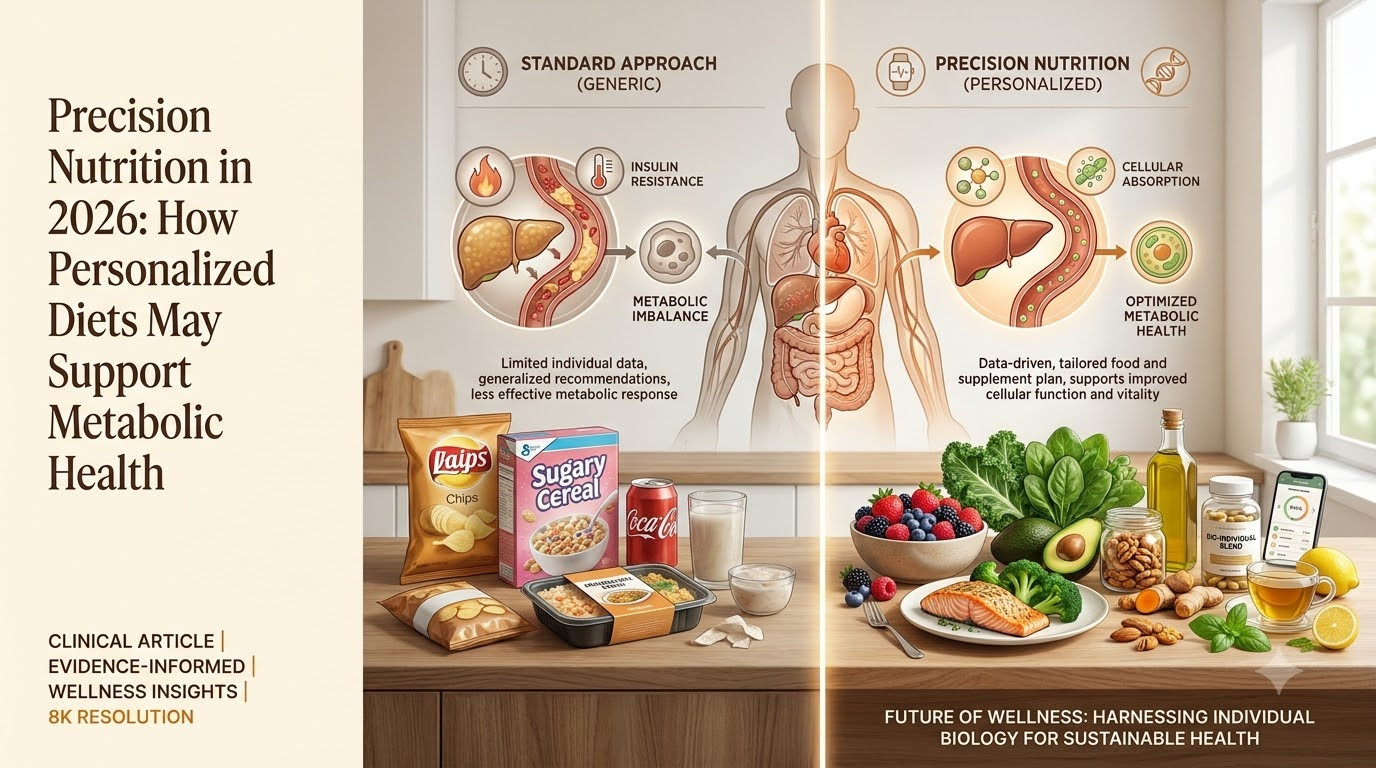
Public health dietary guidelines have historically relied upon broad, population-wide averages. These foundational standards emphasize the consumption of minimally processed whole grains, dietary fiber, lean proteins, and unsaturated fatty acids while establishing safe upper intake limits for sodium, saturated lipids, and refined carbohydrates. While these general population recommendations serve as critical epidemiological cornerstones, clinical practice continuously reveals a striking phenomenon: human metabolic responses to identical dietary inputs are remarkably heterogeneous.
Two individuals matched for biological sex, age, and body mass index can consume an identical meal—such as a standardized bowl of whole oats or white rice—yet exhibit wildly divergent postprandial glucose excursions, variable insulin peaks, distinct lipid clearance rates, and different subjective levels of satiety. This physiological divergence has catalyzed the rapid growth of precision nutrition (also termed personalized nutrition).
In 2026, advances in machine learning, wearable biosensors, and microbial sequencing have moved precision nutrition from speculative academic laboratories into clinical research and consumer wellness. Yet, clinical skepticism remains essential. Direct-to-consumer testing companies frequently make unvalidated claims regarding "food intolerances" and "genetic diets" that exceed current clinical evidence.
This clinical review explores the physiological mechanisms behind inter-individual dietary variation, analyzes 2026 machine-learning meta-analyses, unpacks microbiome-metabolite dynamics, standardizes CGM interpretation, and debunks commercial nutrigenetic testing myths.
- 1. What Is Precision Nutrition?
- 2. Why People Respond Differently to the Same Foods
- 3. Genetics, Metabolism and Individual Nutritional Needs
- 4. Gut Microbiome and Personalized Diets
- 5. Blood Sugar, Biomarkers and Food Responses
- 6. AI, Wearables and Digital Nutrition Technology
- 7. Practical Applications in Everyday Eating
- 8. Benefits, Limitations and Potential Risks
- 9. Myth vs Fact: Understanding Precision Nutrition
- 10. The Future of Personalized Nutrition and FAQs
1. What Is Precision Nutrition?
Precision nutrition is defined as an evidence-based clinical approach that uses an individual's unique biological, physiological, environmental, and behavioral characteristics to formulate targeted dietary advice. Rather than deploying a broad "one-size-fits-all" dietary template, precision nutrition stratifies individuals based on specific metabolic and phenotypic profiles.
The conceptual framework of precision nutrition integrates three interconnected layers of assessment:
- Level 1 (Baseline Phenotypic Assessment): Clinical biomarkers, family medical history, current pharmacotherapy, age, measured body composition, occupational physical activity, and culturally bound food preferences.
- Level 2 (Dynamic Physiological Monitoring): Ambulatory tracking using wearable continuous glucose monitors (CGMs), heart-rate variability sensors, and structured digital food intake journals to quantify real-time metabolic responses.
- Level 3 (Deep Biological Multi-Omics): Profiling single-nucleotide polymorphisms (SNPs) via nutrigenetics, targeted metabolomic profiling (circulating branched-chain amino acids, acylcarnitines), and high-throughput shotgun metagenomic sequencing of the intestinal microbiome.
The objective of precision nutrition is not to manufacture unnecessary dietary complexity, but to eliminate trial-and-error diet design for individuals managing insulin resistance, central adiposity, or digestive dysfunction. For a deeper understanding of how central adiposity influences systemic metabolic health, review our clinical guide on Visceral Fat in 2026: Health Risks, Waist Measurement & Evidence-Based Reduction.
2. Why People Respond Differently to the Same Foods
The stark variation in how different bodies metabolize identical food items stems from the complex interplay of digestive physiology, endocrine sensitivity, and circadian regulation.
| Physiological Domain | Biological Mechanism | Observed Clinical Variation |
|---|---|---|
| Salivary & Pancreatic Amylase | Copy number variation (CNV) in the AMY1 gene governing salivary amylase synthesis. | Individuals with low AMY1 copy numbers experience higher and more prolonged glycemic spikes following starch ingestion. |
| Gastric Emptying Rate | Neurohormonal vagal tone and incretin secretion (GLP-1, GIP, peptide YY). | Rapid gastric emptying accelerates small-intestinal glucose absorption, driving sharp postprandial glucose peaks. |
| Receptor Insulin Sensitivity | Receptor phosphorylation and post-receptor GLUT4 transporter mobilization. | Insulin-resistant skeletal myocytes require significantly higher pancreatic beta-cell insulin secretion to clear circulating glucose. |
| Intestinal Microflora | Fermentation capacity for complex nondigestible dietary fibers into short-chain fatty acids. | Different microbial colonies alter gut hormone secretion and systemic insulin sensitivity. |
| Circadian Chronotype | Melatonin-insulin cross-talk; beta-cell sensitivity declines naturally during the biological evening. | Consuming a high-carbohydrate meal at 9:00 PM generates an exaggerated glucose excursion compared to the same meal consumed at 9:00 AM. |
Furthermore, meal matrix interactions alter biological processing. Consuming carbohydrates in isolation produces a much steeper insulin surge than consuming the exact same carbohydrates paired with viscous soluble fiber and dietary protein. To see how functional macronutrient pairing stabilizes morning glycemic responses, explore our clinical guide on Morning Oatmeal: Fiber & Protein Pairings for Satiety.
3. Genetics, Metabolism and Individual Nutritional Needs
The discipline of nutritional genomics encompasses two reciprocal fields: nutrigenetics (how genetic variation alters nutrient metabolism) and nutrigenomics (how dietary bioactive compounds influence gene transcription and epigenetic expression).
Clinically Validated Nutrigenetic Variations
While direct-to-consumer genetic panels frequently market hundreds of unverified genetic associations, a select few Single Nucleotide Polymorphisms (SNPs) demonstrate robust, replicable clinical validity:
- Lactase Persistence (LCT Gene): Polymorphisms near the LCT locus (such as the -13910*T allele) dictate whether an adult continues producing lactase phlorizin hydrolase in the intestinal brush border. Individuals homozygous for the ancestral allele experience secondary lactose malabsorption.
- Caffeine Clearance (CYP1A2 Gene): The cytochrome P450 enzyme CYP1A2 handles >95% of hepatic caffeine clearance. Carriers of the *1F allele ("slow metabolizers") clear caffeine slowly, meaning high coffee consumption may elevate sustained arterial stiffness, whereas homozygous *1A carriers ("fast metabolizers") experience cardiovascular protection from polyphenols without prolonged vasoconstriction.
- Folate & One-Carbon Metabolism (MTHFR Gene): Common variants (C677T and A1298C) in the methylenetetrahydrofolate reductase gene reduce enzyme efficiency, impairing the remethylation of homocysteine to methionine. These individuals benefit from prioritizing dietary folate from natural dark leafy greens and pulses.
Despite these clear examples, the vast majority of chronic metabolic conditions—including type 2 diabetes, atherogenic dyslipidemia, and central adiposity—are polygenic, involving subtle cumulative contributions from hundreds of disparate genetic loci. A single genetic polymorphism rarely dictates diet design in the absence of clinical context.
4. Gut Microbiome and Personalized Diets
The human gastrointestinal tract harbors tens of trillions of microorganisms encoding millions of unique non-human genes. This complex ecosystem functions as an indispensable metabolic clearinghouse, fermenting indigestible dietary compounds, synthesizing vitamins (vitamin K2, folate, biotin), and metabolizing primary bile acids into secondary signaling molecules.
Microbial Fermentation and Short-Chain Fatty Acids (SCFAs)
When dietary prebiotic fibers escape enzymatic digestion in the upper gastrointestinal tract, specialized commensal taxa—predominantly belonging to the phyla Bacillota (formerly Firmicutes) and Bacteroidota—ferment these fibers into short-chain fatty acids: acetate, propionate, and butyrate. Butyrate serves as the primary metabolic fuel for colonocytes, preserving gut barrier integrity and preventing endotoxin lipopolysaccharide (LPS) translocation. Propionate travels via the portal vein to the liver, where it modulates hepatic gluconeogenesis and cholesterol synthesis.
Because individuals host radically diverse baseline ratios of taxa such as Akkermansia muciniphila, Faecalibacterium prausnitzii, and Bifidobacterium species, identical dietary fiber supplements produce markedly different subjective tolerances and metabolomic outputs. For structured protocols on systematically expanding dietary fiber intake without inducing gastrointestinal distress, review our guide on Fibermaxxing: Evidence-Based Ways to Increase Daily Fiber.
5. Blood Sugar, Biomarkers and Food Responses
Continuous Glucose Monitoring (CGM) systems—initially developed as prescription devices for type 1 diabetes management—have become central tools within clinical precision nutrition research. By measuring interstitial glucose levels via subcutaneous enzymatic sensors every 1 to 5 minutes, CGMs expose physiological variations that static fasting blood glucose or quarterly HbA1c tests overlook.
Pioneering Glycemic Prediction Frameworks
Foundational research by Zeevi, Segal, and colleagues demonstrated that postprandial glycemic responses (PPGR) to identical meals differ dramatically across individuals. By feeding large cohorts identical standardized meals and analyzing simultaneous microbiome profiles, blood biomarkers, anthropometrics, and lifestyle logs, machine-learning algorithms predicted personalized glycemic spikes far more accurately than standard carbohydrate counting or glycemic index (GI) tables alone.
However, clinical interpretation requires caution. Interstitial glucose measurements exhibit an inherent physiological lag (typically 5 to 15 minutes) behind venous blood glucose. Furthermore, transient glucose elevations following meals are entirely physiological; healthy human physiology is characterized by dynamic glycemic fluctuations that return safely to baseline within 2 to 3 hours through appropriate insulin secretion. Labeling all carbohydrate-induced glycemic peaks as "pathological spikes" triggers unnecessary food fear.
6. AI, Wearables and Digital Nutrition Technology
Machine-learning architectures—ranging from gradient-boosted decision trees (XGBoost) to deep neural networks—are exceptionally suited to processing the non-linear, multi-dimensional datasets characteristic of precision nutrition.
A comprehensive 2026 systematic review and meta-analysis published in The Journal of Nutrition synthesized 262 studies investigating AI- and machine-learning-enabled precision nutrition interventions. The investigators observed statistically significant pooled improvements in:
- Total Body Weight: Mean reduction of approximately 1.5 to 2.2 kg across intervention arms.
- Central Adiposity: Clinically meaningful decreases in measured waist circumference.
- Systolic Blood Pressure: Modest pooled reductions of ~2.5 mmHg.
However, the meta-analysis revealed no statistically significant pooled improvements in fasting lipid profiles (LDL-C, triglycerides) or long-term glycated hemoglobin (HbA1c). Furthermore, the certainty of evidence was graded as low-to-moderate due to high heterogeneity and short study durations. A critical perspective published in Nature Communications (2026) emphasized that algorithms trained predominantly on homogenous, affluent urban populations fail to generalize to individuals from different ethnic or socioeconomic backgrounds.
7. Practical Applications in Everyday Eating
Applying the insights of precision nutrition does not require spending thousands of dollars on unverified direct-to-consumer genetic panels or commercial microbiome sequencing. Sustainable, practical personalization can be achieved through disciplined phenotypic observation:
- Maintain a 7-Day Food and Symptom Diary: Record meals alongside subjective markers of satiety, digestive comfort, mental focus, and energy levels 2 hours post-meal. Patterns of postprandial lethargy frequently identify excessive refined carbohydrate loads.
- Optimize Macronutrient Sequencing: Ingesting fibrous vegetables and proteins prior to consuming complex carbohydrates significantly slows gastric emptying, stimulating early GLP-1 release and blunting subsequent glycemic peaks.
- Align Carbohydrate Intake with Physical Exertion: Schedule higher-glycemic meals directly following structured physical activity or resistance exercise, when skeletal muscle GLUT4 transporters are actively mobilized via non-insulin-dependent pathways.
- Support Sarcopenic Defense and Lean Mass: Tailor protein intake to your life stage and training volume. Older adults require higher per-meal leucine thresholds to stimulate muscle protein synthesis. Review our clinical guide on Muscle Health After 40: Strength, Mobility & Healthy Aging.
8. Benefits, Limitations and Potential Risks
While precision nutrition offers exciting scientific potential, clinicians must balance therapeutic opportunities against practical risks.
| Clinical Opportunities | Scientific & Practical Limitations |
|---|---|
| Enhanced Patient Adherence: Diets aligned with personal food tolerances and cultural traditions produce superior long-term adherence compared to rigid dogmatic plans. | Cost & Accessibility Inequity: Multi-omics sequencing, CGMs, and proprietary AI platforms remain prohibitively expensive for most populations. |
| Targeted Glycemic Optimization: Facilitates targeted dietary modifications for individuals with prediabetes or insulin resistance. | Over-Interpretation of Sensor Noise: Healthy individuals may become hyper-fixated on benign glycemic excursions, fostering orthorexic behaviors. |
| Identification of Specific Intolerances: Pinpoints genuine physiological food malabsorptions (e.g., lactose, FODMAPs). | Unregulated Direct-to-Consumer Claims: Commercial labs frequently utilize unvalidated IgG antibody panels that merely reflect food exposure rather than true pathology. |
9. Myth vs Fact: Understanding Precision Nutrition
⚖️ Myth vs Fact: Precision Nutrition in Clinical Practice
| Common Precision Nutrition Myth | Scientific Reality & Clinical Evidence |
|---|---|
| Myth 1: A single saliva genetic test can prescribe your exact ideal diet. | Fact: Human metabolism is polygenic and dynamic. Genetic variations account for only a small fraction of real-world metabolic responses; lifestyle and environment predominate. |
| Myth 2: Commercial stool microbiome tests tell you exactly which foods to eliminate. | Fact: Stool samples provide a static snapshot of transient colonic bacteria. Current science cannot definitively translate microbial taxonomy into precise food exclusion lists. |
| Myth 3: Non-diabetic individuals must keep blood glucose flat at all times using a CGM. | Fact: Postprandial glucose fluctuations are completely normal physiological adaptations. Striving for a completely flat glucose line can induce unnecessary food anxiety. |
| Myth 4: Precision nutrition proves that foundational nutritional guidelines are useless. | Fact: Precision nutrition refines and personalizes established guidelines; it does not invalidate the universal importance of whole foods, fiber, and energy balance. |
| Myth 5: AI algorithms can safely replace registered dietitians and clinical physicians. | Fact: AI models lack clinical diagnostic intuition, cannot detect underlying eating disorders, and must be supervised by qualified healthcare professionals. |
10. The Future of Personalized Nutrition and FAQs
The trajectory of precision nutrition through 2026 points toward continuous multi-analyte biosensors—devices capable of measuring interstitial glucose, ketones, and lactate simultaneously in real time. Combined with longitudinal metabolomics and culturally adaptive machine-learning models, these technologies will offer deeper insights into preventive metabolic health.
❓ Frequently Asked Questions (FAQ)
1. What is precision nutrition in simple terms?
Precision nutrition is an individualized approach to dietary guidance. It considers factors such as age, lifestyle, health history, food preferences, metabolism and, in some research settings, genetics and gut microbiome information. Its purpose is to make nutritional recommendations more relevant to individual circumstances.
2. Is precision nutrition better than a traditional balanced diet?
Not necessarily for everyone. Traditional healthy eating recommendations remain supported by extensive scientific evidence. Personalized nutrition may offer additional value in certain situations, but research has not established that every personalized intervention produces better long-term outcomes than standard dietary guidance.
3. Do I need a genetic test to follow a personalized diet?
No. Genetic testing is not necessary for most people to follow a balanced and nutritious diet. Dietary history, health information, activity levels, food preferences and relevant clinical measurements can provide useful information without advanced genetic testing.
4. Can gut microbiome testing identify the best foods for my body?
Current commercial microbiome testing cannot reliably identify a perfect diet for every individual. Stool testing provides information about selected microorganisms, but interpretation remains complex. Microbiome research is developing, and results should not be used alone to justify unnecessary food restrictions or medical decisions.
5. Can AI and wearable devices improve personalized nutrition?
AI and wearable technologies may help researchers and individuals identify patterns involving food intake, activity and certain health measurements. However, device readings and algorithm-generated recommendations have limitations. Their usefulness depends on accuracy, scientific validation, privacy safeguards and appropriate professional oversight.
📚 Authoritative Clinical & Multi-Omics References
- Antwi J, Harrison OA, Hayatbini N. Artificial Intelligence/Machine Learning-Enabled Precision Nutrition Modestly Improves Anthropometric Outcomes and Systolic Blood Pressure: A Systematic Review and Meta-analysis. The Journal of Nutrition (2026).
- Massara P, Kirkland J, Pagani I, et al. Applying Artificial Intelligence and Machine Learning in Precision Nutrition: Critical Challenges and Horizons. Nature Communications (2026).
- Zeevi D, Korem T, et al. Personalized Nutrition by Prediction of Glycemic Responses. Cell.
- National Institutes of Health (NIH). Nutrition for Precision Health: Precision Nutrition Research Initiative.
- World Health Organization (WHO). Healthy Diet and Noncommunicable Disease Prevention Standards.